

Inside a Petrostate
April 21st, 2026
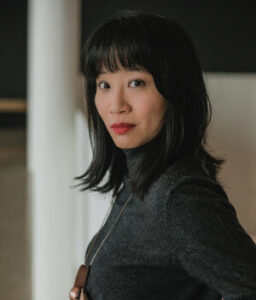
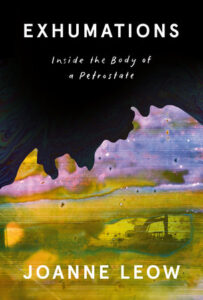
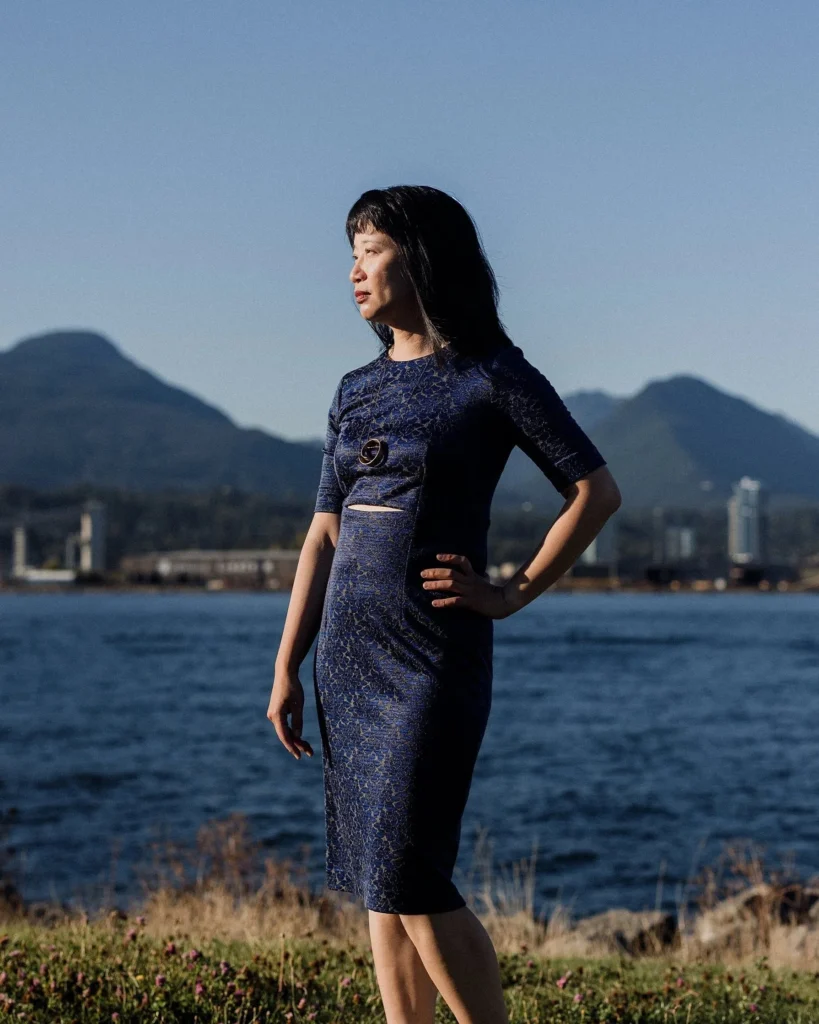
Born and raised in Singapore, Joanne Leow worked as a journalist for state-controlled media before moving to Canada to work on her PhD. Now an associate professor in the department of English at SFU, Leow also writes poetry and creative nonfiction. Exhumations: Inside the Body of a Petrostate (Alchemy/Knopf $35) is a deep dive into the “slow violence” that colonial repressive structures and systems of resource extraction wreak on our bodies in Leow’s home country and Canada—both petrostates to some degree with histories linked to the British Empire. Interwoven in her critique is a memoir of grief and illness involving Leow’s own health issues and that of caring for a parent with a neurological disease. 9781039057272
*
BC BookLook: Describe what it was like growing up in Singapore? What were some of the main dynamics there that shaped you? And what made you rebellious and critical, even if you did (or didn’t) keep it to yourself?
Joanne Leow: I don’t think that I was particularly rebellious and critical when I was growing up in Singapore. Growing up Singapore in the 1980s and 1990s meant a great deal of stability and order. As a child, all I ever knew was one-party rule and it was simply a fact of life. For me, coming from a middle-class Anglophone family in the ethnic Chinese majority meant that I enjoyed a great deal of privilege. One thing that really shaped all of us was the extremely competitive education system which really stratified us according to “ability.” But even then, doing well in school meant that I had a clear trajectory ahead of me that really conditioned me to conform to what was expected.
 BCBL: What drew you into your early career as a journalist in Singapore, given the oppressive nature of communications there? Did you use your position to learn more about the truths of your home country?
JL: I won a scholarship sponsored by the state media company — this funded my undergraduate education in the US. However, this scholarship also meant that right after graduation, I was contractually obliged to work for for the state-run news channel for six years. These contracts are called “bonds.” I wouldn’t say I “used” my position to learn more about Singapore. Being on the beat as a junior reporter meant that I was just out and about every day seeing every little nook and cranny of the island, meeting folks from all walks of life and trailing politicians during their walkabouts. As I detail in my book, working in television news in Singapore was hectic, incredibly fast-paced and exhausting. There wasn’t a lot of time for reflection. It was only when I started graduate school that I began to really examine the significance of my time working there.
BCBL: When did you start to see through the glittering façade of Singapore’s reputation as the jewel of Southeast Asia? Describe some specific events that brought these realizations.
JL: I wouldn’t describe it as something I “saw through.” I think it was more of a process of understanding the significance of what I was seeing everyday. I think this Singapore’s “facade” is really only something outsiders or expatriates see. The rest of ordinary Singaporeans live very different lives from what is depicted in something like Crazy Rich Asians. So it really wasn’t specific events that brought this to the fore in the moment but again, only on reliving these experiences in my writing. One of the episodes that I write about in my book involves meeting Singapore’s founding Prime Minster Lee Kuan Yew for the first time as a young journalist. But it was only much later that I was able to understand the power dynamics in that meeting and its implications for how the larger political system functioned in the country. I would say for me it took moving away to see my country from a different perspective and to be able to express these ideas.
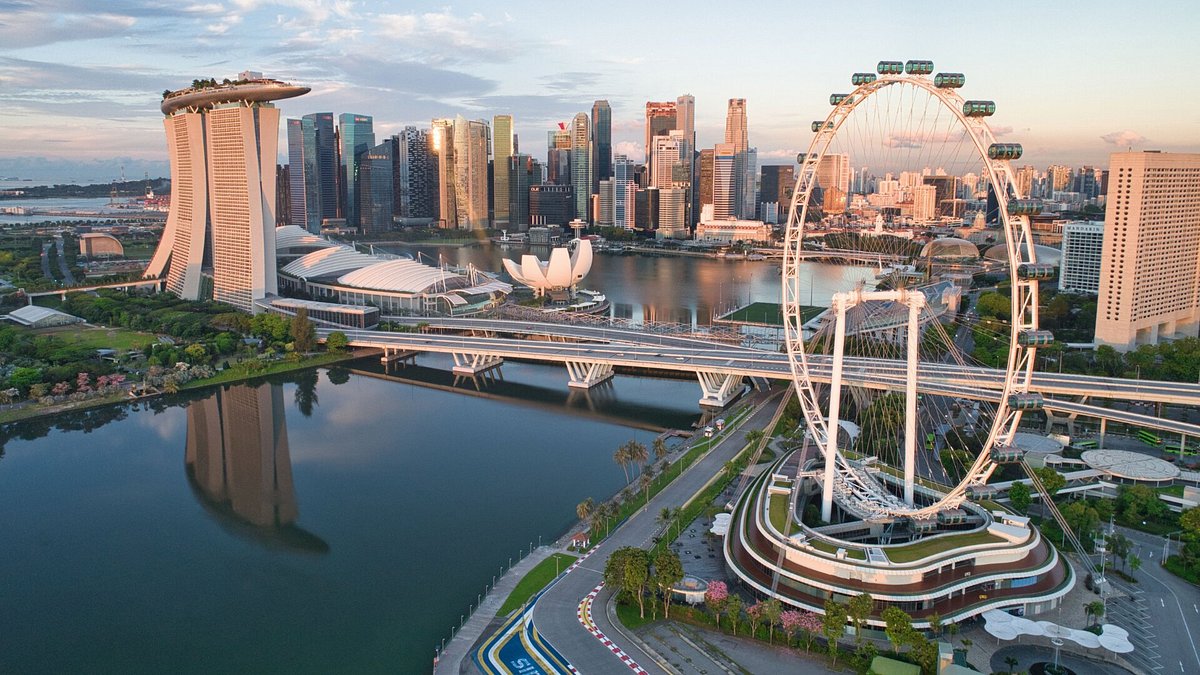
BCBL: When and how did you come to the decision to leave Singapore? And why did you choose to come to Canada, another petrostate?
JL: I left Singapore to pursue my doctoral degree at the University of Toronto after the end of my “bond.” I had always been drawn to academia but I didn’t want to return to the US because I wanted to be in a country that seemed safe for my family and my young children. At that point, I was not thinking of petrostates or anything of that nature. I came to Canada like most newcomers, with an idealized view of the country. To me, Canada seemed impossibly large — large enough to envision diverse futures for my family. It was only while living here, especially in the prairies, that I learned a lot more about the complexities of the country and its settler colonial realities.
BCBL: How do you believe the contaminated and compromised systems (social and physical) of both Singapore and Canada have harmed your body and health?
JL: I think I’m not the only one who wonders what visible and invisible chemicals and pollutants surround us. One of the ideas that I am mulling over in my book is how no one is immune or apart from the environments we live in. I don’t think we can ever come to an accounting of how we are all harmed in fundamental ways by the colonial, capitalist systems. And I don’t think this is unique to Singapore and Canada — every country is completely embedded within international supply chains, so everything that is extracted, exported and imported is a part of this dense global web. I think what we are seeing in the current moment is a great acceleration and revelation of every country’s dependence on terrible industries of energy extraction, weapons manufacturing and so on. [T]hese global systems link multiple countries, from Singapore to Vietnam, Cambodia, Palestine, Israel, Canada, and so on.
How does this harm our bodies and health? Even just taking the most pervasive experience of air pollution which ignores borders and is something that we are all subject to (thinking of the fire season in North America and the haze in Asia), we know that it leads to all kinds of poorer health outcomes. What is socially damaging I think is that we don’t appear to care enough to do something about this.
BCBL: Do you think you will ever return to Singapore? Or move from Canada?
JL: I don’t think so. My children are essentially Canadian now. I think what is important is that, as immigrants, we don’t just think about the rights that we receive when we become citizens of this country, but the responsibilities we have and the terrible settler colonial histories that we inherit. I think my work here as a writer and scholar is to be in solidarity with folks doing anti-racist work, and making efforts towards truth and reconciliation. I have received so many opportunities here and I have an obligation to do this work.
BCBL: Please comment on the enduring impact of early colonial rule in Singapore and Canada as the foundation for the “slow violence” that continues to harm people and the environment.
JL: Where Canada had the Hudson Bay Company, Singapore had the East India Company. So from the very beginnings of colonial rule, we get the sense of the corporate nature of imperialism and its devotion to extraction and profit at all costs. This was not just a material reality but an ideology that continues to influence how we treat people and the environment. So while the early terraforming of both countries, the destruction of forests and grasslands in Canada and the creation of plantations and land reclamation in Singapore, have ecological impacts that endure to this day, it is also the attack on Indigenous life ways that have profoundly damaged our relationships to our surroundings. This means a lot of how we operate and live on these lands and waters reproduces the longstanding colonial violences.
BCBL: You use a sophisticated analysis drawing on art, film and literature to understand how our post-colonial systems are still affecting us. Please explain how that works.
JL: I am a literary and cultural studies scholar by training, and I think that art, film, and literature offer us ways to come to a deeper understanding of how power functions in our lives. For instance, I don’t think Canada is “post-colonial” by any means — and it is through powerful works by Indigenous filmmakers, writers and artists that we can come to real reckoning with this. I think of the work of the Cree filmmaker and scholar Tasha Hubbard and how it allows a whole range of audiences to confront difficult issues like the Sixties Scoop. In the Singaporean context, I think of how some of the artists I write about use abstraction and conceptual art to evade censorship and make political critique. Sitting with and thinking alongside these artistic works really helps me articulate the complicated ways in which history and the present day are always intertwined. I really love learning from and thinking alongside writers, artists and filmmakers.
BCBL: Do you see environmental degradation getting better or worse?
JL: This is such a huge question! I mean, at this juncture, in this geo-political moment, it seems pretty bleak. We’ve blown past all the agreed upon caps on emissions and continue to fund wars that leave just unthinkable amounts of suffering and toxic substances in their wake. I want to be hopeful that at some point, people will just say enough is enough but I’m not sure what that will take.
BCBL: Anything else you would like to add?
JL: I hope that readers will see that my book is not just about the specifics of Singapore but how it is really asking us to think on a larger scale: how we are all connected through these longer histories of empire and extraction. At the same time, I turn to a very personal mode of memoir writing, about illness, caregiving and grief, which I hope will resonate with folks who are going through these same parts of life.
This interview will be edited for space in the upcoming Summer issue of BC BookWorld newspaper, due out June, 2026.




Leave a Reply