

Trust the reader
May 26th, 2026
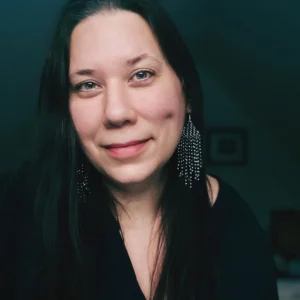
Odette Auger is a member of Sagamok Anishnawbek First Nation living in the Ayajuthem-speaking part of the Salish Sea. An award-winning journalist and creative nonfiction writer, her work has appeared in The Malahat Review and The New Quarterly. Her debut novel, Eyebright, is forthcoming from Simon & Schuster Canada in spring 2027.
In a conversation with Fiction Board intern Janet S. Pollock from The Malahat Review, writer and journalist Odette Auger reflects on creative nonfiction, memory and the responsibility that comes with telling personal stories. As judge for the 2026 Constance Rooke Creative Nonfiction Prize, Auger says she is drawn to writing that “trusts the reader,” allowing meaning to emerge through “image, memory and association” rather than explanation. She also discusses the differences between journalism and creative nonfiction, noting that while journalism centres accountability and multiple perspectives, creative nonfiction allows truth to move through memory, emotion and dreams.
Janet S. Pollock: The Malahat Review is fortunate to have you as this year’s Creative Nonfiction Prize judge. Could you tell us what you look for in a winning entry?
Odette Auger: I’m drawn to work that trusts the reader. When a writer resists explaining everything and instead lets meaning gather through image, memory, and association. I’m interested in pieces where something is at stake beneath the surface. It doesn’t have to be loud. Often it isn’t.
I pay attention to what a writer lingers on, what is left out? The strongest work is when the reader begins to feel the undercurrent alongside the writer.
I also love precision, not just in language, but in feeling. An honest moment stays with me longer than something that tries to do too much.
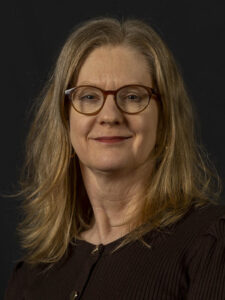
Janet S. Pollock
JP: You are an experienced writer of both journalism and creative nonfiction. These genres can be viewed as providing different approaches to “truth.” What do you value about how each genre renders “truth”?
OA: Journalism appealed to the ability to see other POV, the facets of any truth. To hold ethics and while centring all the voices (not just those held up or spotlit). There’s accountability and a discipline in listening without shaping.
Creative nonfiction has the listening in common—but allows for truth to shift into memory, partial memory, not to mention dreams! Truth is felt and shared. Although I believe the best journalism approaches that, alongside fact checking.
JP: The creative nonfiction genre can present challenges for writers in terms of honouring privacy, both their own and that of people they write about. How do you approach this issue in your own writing?
OA: This is the question that lives with me when I’m writing creative nonfiction.
For me, it starts with asking Whose story is this, really?
I’ve let stories sit for stretches, to live a little on their own before I return to them. And each time I’ve had even a glimmer of hesitancy, sure enough it’s very clear when time has lapsed.
Sometimes it’s more about compressing events or scenes, and finding understanding.
JP: Congratulations on your novel, Eyebright, forthcoming with Simon and Schuster Canada. I’m curious about how your writing experience differs between fiction and creative nonfiction.
OA: With fiction, especially in Eyebright, I can move through time differently, let memory and the present sit closer together, or let something unresolved stay unresolved. The core process feels similar, though. Paying attention to small moments—how something looks, how it shifts, what it opens up. The difference is that in fiction, those moments can lead somewhere unexpected.
Fiction has made me more aware of how much creative shaping is already present in nonfiction.
JP: You’ve written extensively as a journalist about the lives of, and the quest for justice for, Indigenous peoples. How do you see the relationship between the role of writer/artist and the role of activist working for societal change?
OA: I think artists can move in places where other kinds of work can’t.
Art can sit with something, or return to it from different angles, until it becomes harder to ignore. I’m less interested in trying to convince people, and more interested in people understanding.
But even in journalism, sharing a moment, a detail, a way of seeing that lands and stays with someone. For example, Jared Lowndes’ mother recalling a story book he made when he was seven about orca families staying together. He put his little arms around her legs and said, “I’m going to live with you forever.” She told me sitting in the shade of a tree, outside the funeral home waiting for his ashes, after RCMP killed him.
Shared stories can shift how we understand something, even slightly.
Sometimes the most effective kind of change doesn’t come from being told what to think, but from being made to feel something you can’t quite shake.
JP: How did you come to writing personally, and do you have any suggestions for emerging writers?
OA: I came to writing early, before I thought of it as writing. As a kid, I was always drawing, always putting things on the page. It was the most immediate outlet, whatever I couldn’t say out loud just went there.
You know how kids’ art doesn’t need to have “titles,” how that circles back to box A, B, C, that includes who’s labelled as “creative” or not. Those boxes can shape what feels possible. And on some level, they shape who gets to imagine a life in the arts.
I was told that story has agency. So I think if a story needs to be told, it will be. Follow it, let it out, use your voice.

The Malahat Review is still accepting entries for the 2026 Constance Rooke Creative Nonfiction Prize, open to Canadian and international writers worldwide.
The submission deadline is August 1, 2026 at 11:59 pm PDT. One winner will receive CAD $1,250 and publication in the magazine’s Winter 2026 issue #237.





Leave a Reply