


Shadow Warrior
Having never sought the limelight while he was alive, David Garrick, aka Walrus, finally gets his due as an environmental hero.
June 10th, 2026
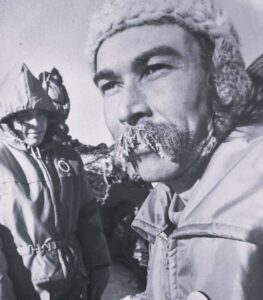
David Garrick was a pioneering Canadian eco-warrior, mystic and archaeologist.
When he died in 2023, BC environmentalist David Garrick, known to friends and colleagues as “Walrus,” left more than 100 journals packed with field notes as well as reports, articles, pamphlets, letters and his admired book on culturally-modified trees. That material proved a research bonanza for Alert Bay author Catherine Marie Gilbert in writing this compelling biography, Walrus: The Remarkable Life of Eco-Warrior David Garrick (Ronsdale, $24.95)
Review by Trevor Carolan
Canada’s West Coast has produced a constellation of environmental heroes: Bob Hunter, Alexandra Morton, David Suzuki, Wade Davis, Tzeporah Berman, Rex Weyler and others. Yet serving alongside many, as Rod Marining, a battle-scarred Greenpeace veteran states here, have also been the shadow warriors like Walrus—the organizers and communicators indispensable to any successful campaign. Quiet, dedicated, with a purist’s soul underscored by honour and modesty, as Gilbert’s book intimates, while never becoming a media darling, Walrus was a vital cog in West Coast environmental and social justice action.
Gilbert’s work unfolds as a synchronoptic wall chart of BC’s environmental movement history. Born in 1946, Garrick was raised in rural Shanty Bay, Ontario, and experienced one-room country-school life. When his father, a health officer, moved the family to Panama for a post with the World Health Organization, the teenager witnessed “hopeless poverty” contrasted with “the artificial luxury” of the Canal Zone’s expatriates.
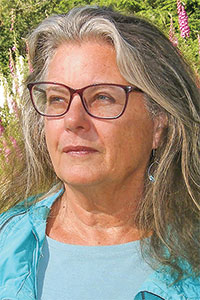
Catherine Marie Gilbert
At Peterborough’s Trent University during a lengthy student canoe voyage to Montreal’s Expo 67, the group collected samples of toxic effluent and sewage that had been dumped into local rivers. Their “Peterborough Pollution Probe” sparked lawsuits and remedial action—his first serious eco-protest.
With his new wife, Marjory, Garrick moved to Vancouver, “a place of experimentation and progressive thinking,” writes Gilbert. Living in a Kitsilano commune, they encountered the city’s hippie-era alternative scene. From street-selling The Georgia Straight, Garrick began writing for the weekly on “cooperative housing, organic gardening, herbal medicine and community events.” His life path was defining itself. He got psychedelicized, then politicized in the All-Seasons Park protests defending Stanley Park from major hotel encroachment. Garrick helped cook in the camp that sprang up and organized public gatherings and music events. He adopted a nom de plume, Walrus Oakenbough, after the totemic animal and in honour of “druidic” tree wisdom. Soon, he’d meet future Greenpeace stalwarts Paul Watson and Rod Marining.
While meeting Navajo elders struggling against coal strip mining of their sacred Black Mesa territory in Arizona, Garrick experienced “Sun Man” visions reminiscent of ancient petroglyphs he’d seen on his Peterborough expeditions and began to understand “interconnectedness.” He vowed to keep writing on Indigenous matters and never let up on this.
When Watson asked Garrick about joining the Wounded Knee protest in South Dakota, they set off with friends and a small amount of financial aid from Bob Hunter and Greenpeace. Gilbert offers a summary of the grievous Indigenous history of Wounded Knee, explaining its epic stature. Garrick and Watson made it past armed FBI and US Indian Agency roadblocks into the resistance site led by AIM, the American Indian Movement. Those familiar with Leonard Peltier’s tragic saga there know it became a bloody confrontation. The Canadian pair survived the shootout, escaping through a hidden ravine.
Garrick’s wife took her life soon after. Devastated, Garrick retreated to heal. Then Watson called again. Would Garrick “help save the whales?”
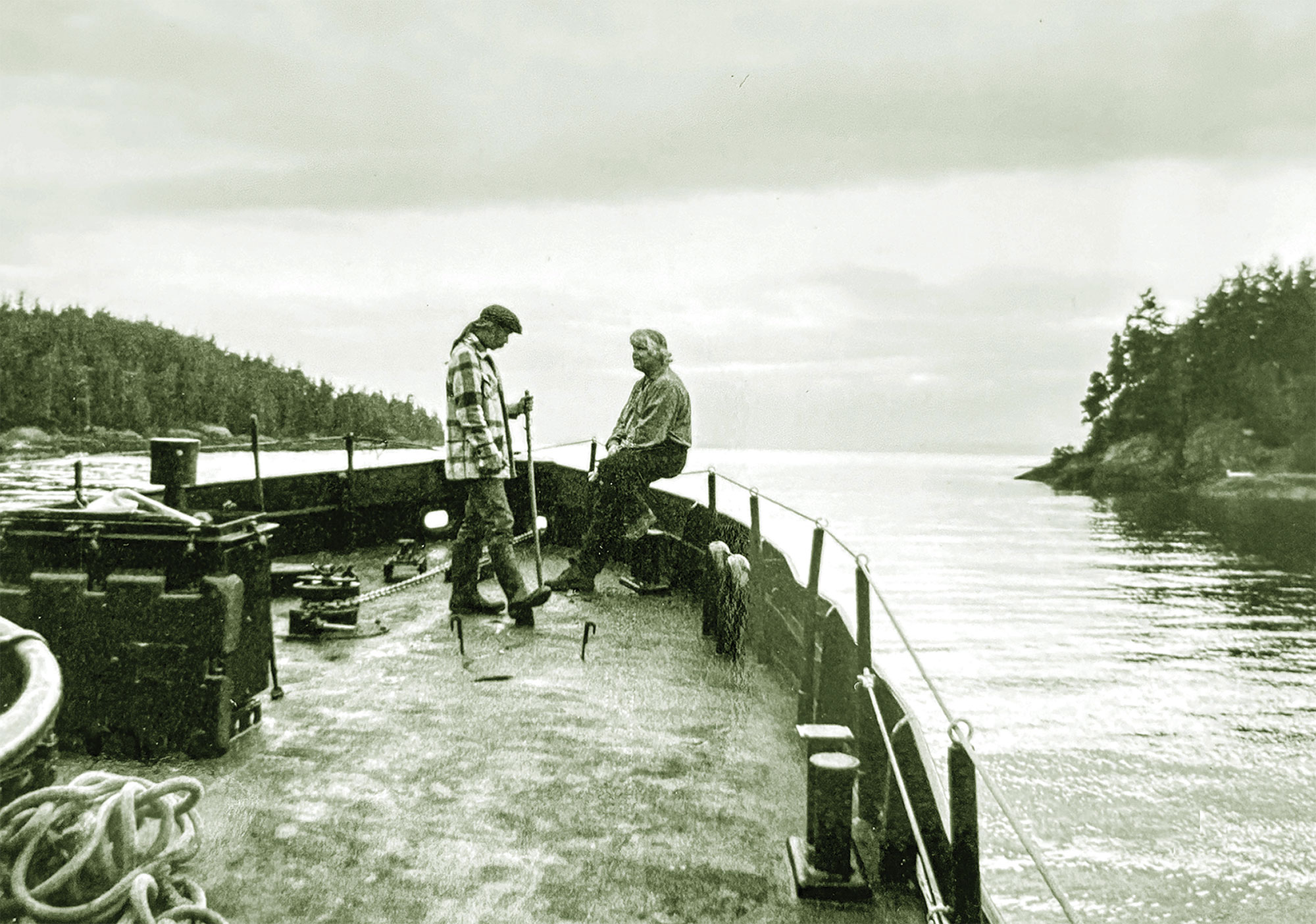
The final meeting between David Garrick and Paul Watson, on board Paul’s ship anchored by Hanson Island, 1995.
The heart of Gilbert’s book covers Garrick’s participation in historic Greenpeace campaigns to save the world’s great whales from commercial slaughter and its work to end the annual baby harp seal hunt in Atlantic Canada. From ship’s cook to helping locate Soviet whalers, acting as communications roustabout and recruiting volunteers for hazardous missions, Garrick toiled at the sharp end of eco-activism. Much has been written elsewhere about this period and, relying on Garrick’s journals, Gilbert also portrays these undertakings poignantly. In the anti-whaling episodes, it’s as if everyone—Russia’s whale-killing fleet, their Canadian eco-pursuers and even the dying whales—knows exactly what’s going on. It’s like reading Captain Cook’s Tahiti journals that herald a critical moment as the world’s fundamental idea of itself changes irrevocably.
During this period, Walrus fell in love with Taeko Miwa, a Japanese translator. They had two children. However, his journals show that by 1976 Walrus was feeling disillusioned with Greenpeace over its funding priorities, shifting leadership and what he saw as a lack of empathy for Indigenous sensitivities.
Walrus became a researcher for SPEC, an eco-group working to oppose uranium mining and nuclear power in BC. Their dedication convinced Premier Bill Bennett to shelve that idea. Significantly, he also began studying “CMTs,” or culturally modified trees, on Hanson Island near Alert Bay. His understanding of where cedar bark had been peeled by Indigenous peoples for cloth weaving, medicine, rope making or to make planks would make waves—first in resistance against old growth logging; then, critically, in First Nations’ land claims where these “memory trees” evidenced prior use of land in establishing legal tenure precedents. Walrus established his Earth Embassy camp off-grid on Hanson. That became his home for 25 years and it was often visited as a learning centre by Indigenous and non-Indigenous students. Here, he wrote his expert book on CMTs, published by Western Canada Wilderness Society.
Did Walrus feel resentment when more charismatic, or later more opportunistic figures received acclaim? Possibly. He saw what was happening in the eco-movement, but stayed with what was closest to his heart. Personally, he lived marginally. This exceptional book is worth reading to remind us of the enduring merit of grassroots shadow heroes like Walrus. As Gilbert argues, he led a remarkable life. 9781553807414
Trevor Carolan writes from North Vancouver.
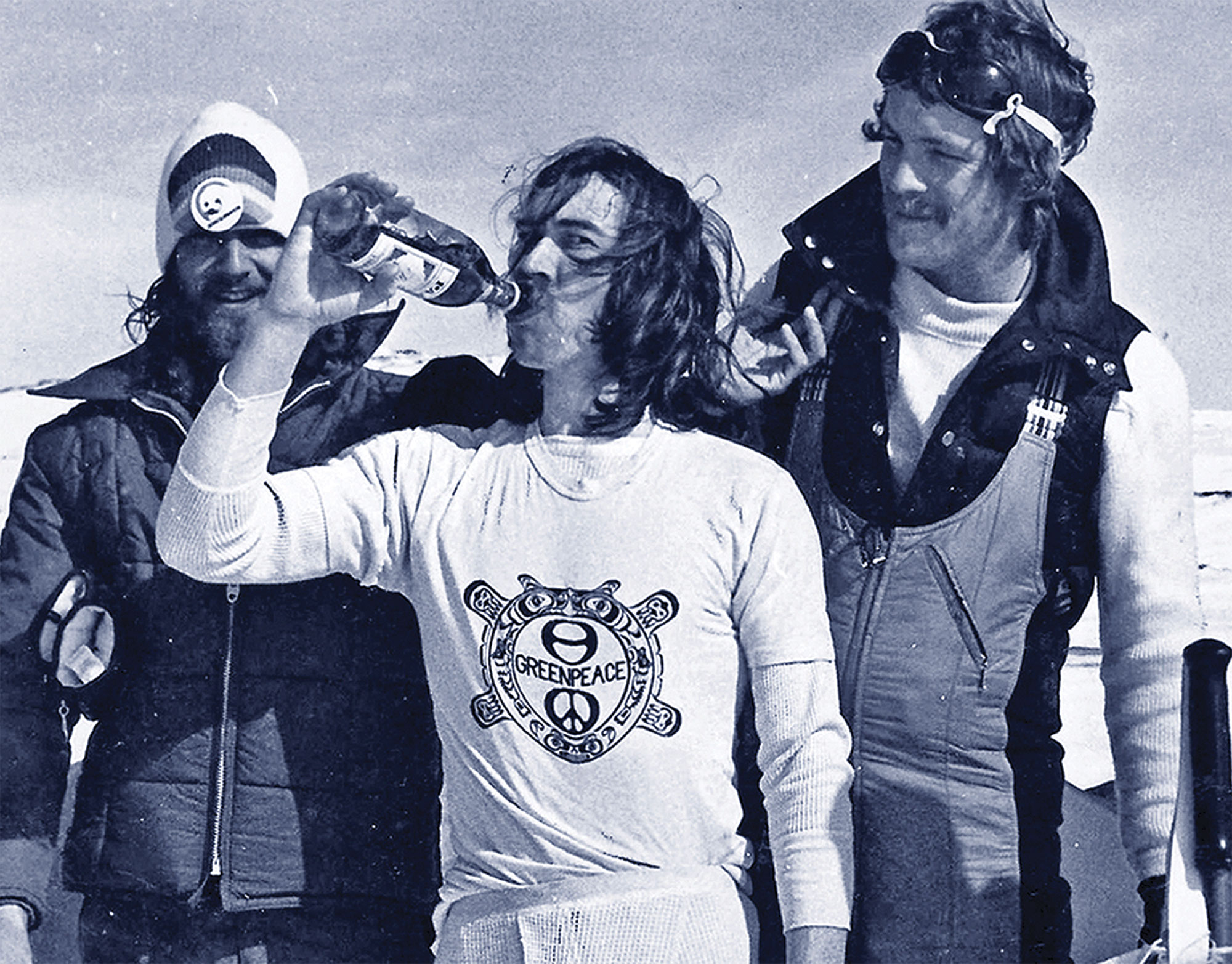
David Garrick (centre) with the Greenpeace Seal Campaign, Belle Isle, 1977.




Leave a Reply