


Making it Work
In the age of punk rock and heavy metal hair bands, Doug and the Slugs were a surprise hit in Canada with their enigmatic and heartfelt songs.
June 10th, 2026
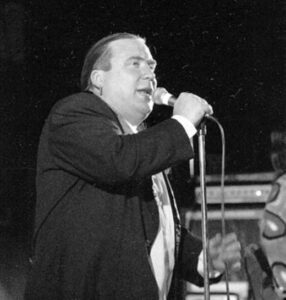
The late Doug Bennett, the legendary and charismatic frontman of Doug and the Slugs.
Bear with me for a moment while I shake my fist at this cloud. There are, no doubt, many things that Vancouver has gained in its post-Expo 86 transformation into an international corporate megalopolis, but I’m not about to list them here. Instead, thanks to the trip down memory lane that is Real Enough: The Unlikely Story of Doug and the Slugs by Simon Kendall and Aaron Chapman (Anvil Press $25), I’m thinking about what has been lost.
Review by Alex Varty
Imagine being able to stroll down to the port, unimpeded by chain-link fences or security, and feast on a spectacularly fresh shrimp sandwich in a longshoremen’s café while gazing down on the very wharf where said shrimp had been landed just hours before. Imagine smugly quaffing a “dark coffee” in the Classical Joint, watching the passing action on Carrall Street while hearing Al Neil demolish a piano or Dick Smith’s saxophone soar through some up-tempo bebop. Or imagine climbing up and up and up a steep and narrow staircase, paying a nominal entrance fee and venturing into the City Space loft, packed with a few hundred stoned and sweaty people gyrating to the sounds of the world’s second-best party band. Doug and the Slugs were never The Meters, but on a good night they came close.
To be honest, nobody quite knew what to make of Doug and the Slugs. This was 1977, or maybe early 1978, and if it was the era of punk, snotty kids with big attitude but little musical ability, it was also the era of hair metal, snotty kids with blazing chops and enough hairspray to puncture the ozone layer. Yeah, the punks had the lapel badges but everyone else had their genre signifiers too, except for these locals. Perhaps Mötley Crüe took the band name that should have been theirs. Slug’s drummer, John “Wally” Watson looked like a Hell’s Angel who’d discovered the joys of moustache wax. Bassist Steve Bosley was the sharpest dresser, in a very New Wave kind of way. Six-foot-five keyboardist Simon Kendall could have wandered on off the basketball court. Guitarists John Burton and Richard Baker played the game of opposites: Burton a total rockstar in teased red hair and (if I remember correctly) red leather pants, Baker a sound scientist armed with the guitar-world equivalent of a slide rule (a very unfashionable Gibson Les Paul Recording model, which came with its own operator’s manual). And the guy in front, Doug Bennett, was an undeniably pudgy fellow with slicked-back Humphrey Bogart hair and a fine line in five-dollar thrift-store suits.
The kind of people that listen with their eyes were going to be very, very confused—and for the most part they were, even as the band won some measure of fame. The ears, though, told a different story. These guys could play and their unlikely leader had a cutting line in on-stage banter, but softened by strong melodies and lyrics that sounded both enigmatic and heartfelt. The Slugs were anything but shallow trend followers—and maybe that’s why, 22 years after Bennett drank himself to death, we now have a second book about the act, as well as a well-received documentary film, Doug and the Slugs and Me.
Real Enough, which follows Burton’s 2023 memoir Doug and The Slugs: 50,000 Slug Fans Can’t be Wrong, is a collaboration between keyboardist Kendall, the band’s music director for most of its existence, and author and civic historian Aaron Chapman. It thus benefits from both firsthand experience and a bit of distance: Kendall, a rock musician of unusually sober habits, has most of his memory very much intact, while Chapman fills in the cultural context. Real Enough also draws on Bennett’s unpublished journals, which give some insight into an artist who, despite his ebullient stage persona, could be well-armoured and aloof.
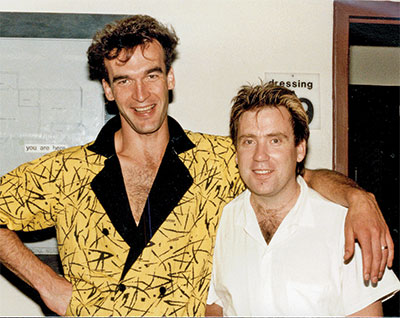
Simon Kendall, Doug Bennett, dressing room, circa 1985.
“To some extent, Doug kept us all at arm’s length,” Kendall writes. “It was his survival instinct—he never wanted to appear vulnerable or dependent.” Yet beneath his adoption of a hardboiled film noir dress code, Bennett was secretly wracked with insecurity. “The only chance of redemption I see is one of my own songs becoming a hit, which is the longshot and we all know about longshots,” Bennett confided to himself in an October 1982 journal entry, perhaps in the midst of recording the band’s third album with Joan Jett’s producer, Ritchie Cordell. “All in all, this week marks the loss of innocence for Doug Bennett and the first steps towards selling out. ‘Don’t worry’ say the managers and producers. ‘You’ll always be accused of that.’ Being accused is one thing, feeling it in your very bones is another. And lord knows, right now I feel it awfully bad.”
Bennett’s instincts were right. Brought in specifically to make hits, Cordell botched the job. Kendall says the ensuing record, Music for the Hard of Thinking, was “the crappiest-sounding record we ever made” and the Slugs were released from their RCA recording contract, but with a massive debt outstanding. Their Canadian fans — and the band’s own road-warrior inclinations—kept the ship afloat, but the Slugs never won the international fame their management, at least, had hoped for. After such a promising start, it was a matter of diminishing expectations, with core band members slowly dropping out and being replaced by a rotating cast of Slug subs until the original six reconvened for a triumphal reunion at Vancouver’s Commodore Ballroom, scene of some of their most acclaimed early shows, in 2003. But by then it was too late for anything other than the nostalgia circuit, and too late for Bennett himself.
That sounds as if Real Enough is a sad tale, and in many ways it is. But there’s wit here in the road anecdotes and remembered teenage antics; all of the Slugs save Bosley and Bennett grew up in the same Vancouver neighbourhood, and in-jokes abound. Kendall, who really is one of the nicest people in the music industry, is a droll and self-effacing narrator. One might wish for more insight into what made Bennett tick, however. A skilled graphic artist and video director as well as songwriter, he clearly harboured an artist’s nature but also some kind of wound that led him to self-medicate, resist intimacy and occasionally act out. The true nature of that injury went to the grave with him, but perhaps the songs are legacy enough. Real they most certainly are. 9781772142211
Alexander Varty’s 1970s art-punk band, AKA, once opened for Doug and the Slugs on a three-show mini-tour of the Fraser Valley and Vancouver Island, which Varty says was “a weird and adventurous choice for the Slugs.” AKA encountered some hostility from the Slugs’ audience, but enjoyed interactions with the Slugs’ band and crew. Varty still plays “a nerdy Gibson Les Paul Recording guitar” of his own, he says, after being wowed by Richard Baker’s subtle and understated virtuosity.
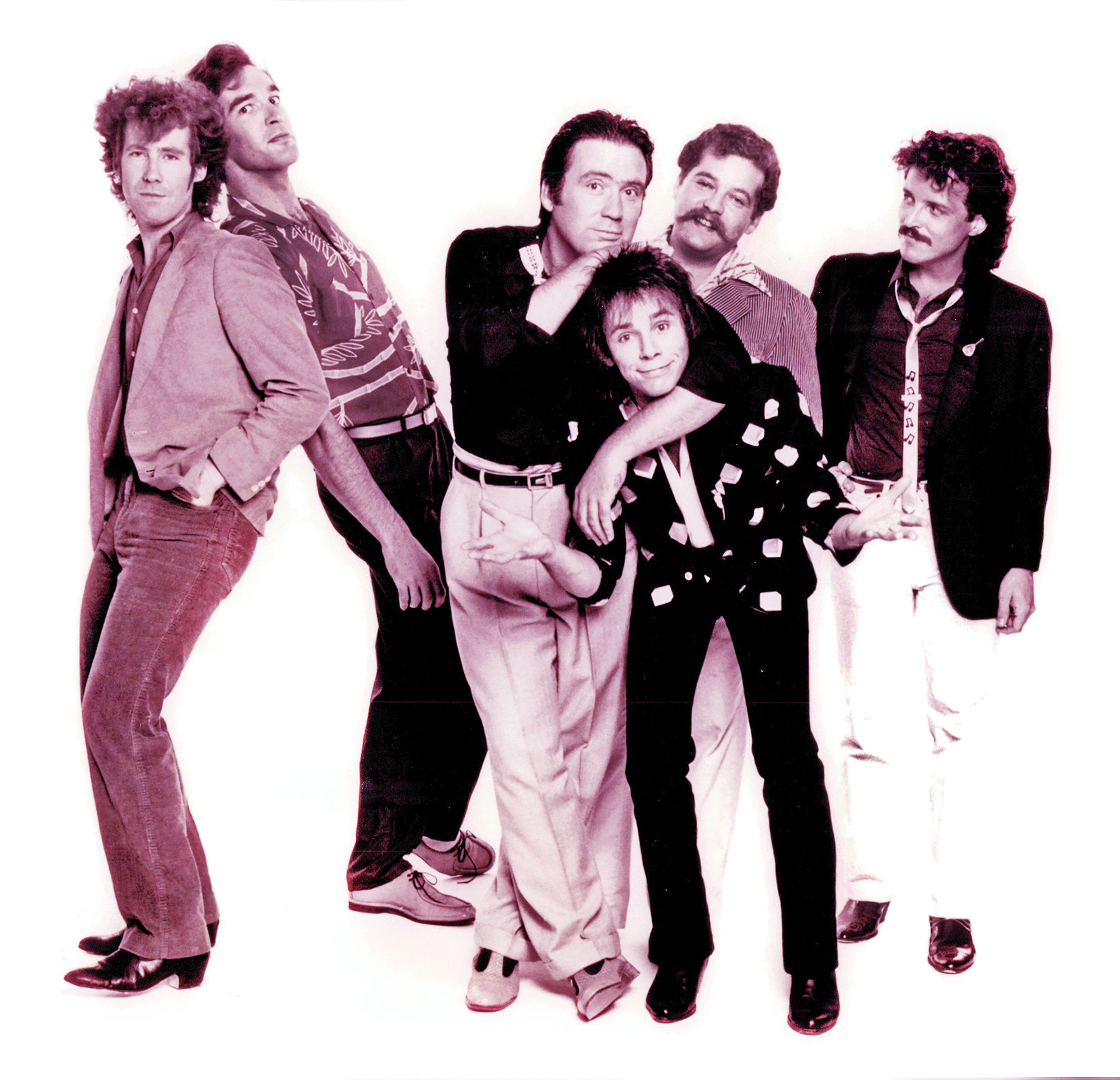
Doug and the Slugs, promo shot for their third album, Music For the Hard of Thinking.





Leave a Reply