

Trump and Canadian civil society
August 18th, 2026
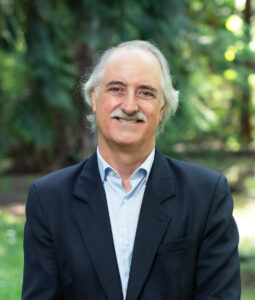
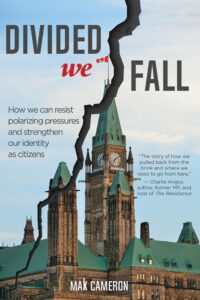
In Divided We Fall: How We Can Resist Polarizing Pressures and Strengthen Our Identity as Citizens (Lorimer $27.95), UBC political scientist Max Cameron examines the forces pulling Canada apart—and argues that democratic citizenship can still hold it together. Cameron is a professor in UBC’s Department of Political Science and School of Public Policy and Global Affairs, and a co-founder of the Institute for Future Legislators, which prepares citizens for public life. He spoke with BC BookLook about Donald Trump, toxic polarization, resource extraction, Indigenous resistance and the emotions required for democracy.
BCBookLook: You write that Donald Trump gave Canadians a reason to rally around the flag. But once we have rallied, how do we actually resist a bully?
Max Cameron: Trump’s shamelessness is one of the most important characteristics of his leadership. He appears to care about little beyond his own ego. In preserving our identity—and cultivating the patriotism we need in order to respond—we must take pride in what Canada has done right while retaining a sense of civic shame about what it has done wrong. That is a difficult balancing act, particularly after the country’s reckoning with residential schools.
We still have much work to do toward reconciliation and coming to terms with our past. But our survival as an independent country and our sovereignty are bound up with the success of that effort. What Canada is experiencing from Trump resembles what settler Canadians have done to Indigenous peoples since contact: coming in and saying, “We are now in charge, and you must do what we tell you.” I hope we can resist Trump’s bullying without ignoring our own wrongs or rallying around the flag in a way that coerces people who have good reason not to do so.
BCBL: Canada has repeatedly struggled to hold together different nations, cultures, languages and regions. What is the essential quality that unifies us?
MC: For me, it is citizenship. By that, I mean everything required to form a self-governing community—not simply possessing a passport, but accepting the rights, responsibilities and duties of membership in a democratic political system. Citizenship means voting, taking part in political and civil associations, making your voice heard and learning to do so civilly.
By civility, I do not mean mere politeness. The word is closely related to the idea of a self-governing community: our ability to work with others, deliberate collectively and reach decisions so that we control our own destiny.
One of humanity’s great evolutionary advantages is our ability to make tools and our most important tool is language. We can use language to manipulate and deceive, but also to cooperate and build organizations on an extraordinary scale. One obstacle to that cooperation is the abusive individual—the alpha figure who wants to dominate the group, control it and take more than a fair share of its resources.
As human settlements grew more organized, we developed mechanisms for holding such people and groups accountable. We upheld a version of the Golden Rule: if you are not prepared to live by rules that apply to everybody else, we do not want you in the group. When survival depends on the group, exclusion is a terrible threat. Even today, the fear of being named and shamed is powerful.
This creates a genuine difficulty. We must call out behaviour that divides us in order to dominate us, but we should not imitate Trump, who uses shame to denigrate and weaken his opponents. We must insist on civility while fostering the prosocial practices that make collective life possible.
 BCBL: You suggest democracy is how we learn to live together without killing one another. How stark is the choice between democratic society and violence?
MC: The Argentine political scientist Guillermo O’Donnell used to say that democracy is about learning to live together without killing each other. That does not mean an orderly society must be democratic. [Philosopher Thomas] Hobbes’s solution was straightforward: create authority. He believed it was better to obey authority than to endure “a war of all against all,” in which life is “nasty, brutish and short.” China and the former Soviet Union demonstrate that order can exist without democracy.
The beauty of democracy, going back to the ancient Greeks, is that it aspires to a political order based on non-domination: power with, rather than power over. It is a system in which all aim to participate in self-government and voluntarily resolve differences without violence.
That is an ideal. We live in modern states, and modern states are coercive apparatuses. But democracy is the most powerful tool we have for restraining the coercive state by requiring governments to obtain public authorization to act. The consent of the governed gives a modern democratic state its authority.
BCBL: Do Canadians need instruction in recognizing toxic polarization when the United States offers such a vivid warning?
MC: When I began the book, I thought the argument would be difficult to make. For decades, through the Institute for Future Legislators and related projects, I have worked with politicians and people preparing for public life. Again and again, politicians and citizens told us that our politics was becoming nastier, more rancorous and less civil. That concern helped motivate the book.
I wanted to argue that we must listen to each other; become more compassionate, empathetic and capable of seeing another person’s perspective; and find just compromises. At the same time, we must resist domination, call out abuse and refuse to tolerate people who deny us the rights necessary for self-government.
Then Trump began talking about Canada becoming the 51st state and Canadians came together. The book became less about educating the public than about learning from what Canadians were already demonstrating. We have the capacity to check polarization and we are rather good at it. We look south, see the catastrophic consequences of toxic polarization and pull back.
But the United States cannot serve only as a negative example. Canadians must think creatively about building civil society, improving our capacity for self-government and strengthening our identity as citizens.
BCBL: You identify extractivism as a source of polarization. Yet Canada has relied on natural resources from the beginning. What is the alternative?
MC: There is much truth in that. If you enter the legislature in Victoria and look at the paintings beneath the principal dome, you see fishing, mining, forestry and agriculture. Settler Canadians have benefited enormously from the country’s natural wealth. When our backs are against the wall, the instinct is to double down on resource extraction because that is what has made us rich.
But the lesson of the past century is that prosperity does not come merely from pulling things out of the earth and shipping them elsewhere for processing. We need innovation, higher productivity, research and development. Many countries begin with natural resources, build other industries and gradually become less dependent on extraction. Japan has relatively few natural resources, but it is rich, innovative and strong in manufacturing and services. It also benefits from social cohesion.
I am not saying Canada should abandon extraction. We have critical minerals, oil and gas, timber and water that the world wants. But we should not mistake them for our salvation. That would deepen activities that contribute to polarization.
Oil and gas are among the key sources of Canadian polarization. The Freedom Convoy was ostensibly about vaccination and vaccine mandates, but an earlier effort to organize a convoy began as a protest against the carbon tax. The rigs crossing the country carried grievances related to oil and gas, and to the conflict between climate policy and a province, an industry and the many people whose prosperity depends on it.
Natural-resource dependence is not only an unsustainable economic strategy. Petro-states tend to be highly polarized, and democracy is difficult to sustain in countries such as Venezuela or Nigeria. Norway, by contrast, has used a sovereign wealth fund to invest resource earnings for future generations. Alberta created its Heritage Savings Trust Fund earlier, but largely abandoned its original long-term ambition.
Our leaders tend to think in terms of the next year, the next election or the next quarter. We should think in multigenerational terms, balancing investments today with benefits in the future. We must diversify our economy, trading relationships and alliances, encourage internal trade, build new industries and strengthen services so we are less vulnerable to external markets.
BCBL: You assign Justin Trudeau some responsibility for Canada’s discord. Does that give one politician too much credit—or blame—for deeper forces?
MC: The sources of polarization are multiple and deep: inequality, social media, communities’ anger at being left behind, globalization and exposure to forces over which people feel they have little control.
My specific criticism of Trudeau is that he began well in 2015 but later tried to convert a minority government into a majority by using the vaccine mandate as a wedge against the Conservatives. That contributed to Erin O’Toole’s removal, helped create the conditions for the Freedom Convoy and was followed by the mishandling of the convoy itself. Authorities allowed it into Ottawa and then dithered. The paralysis, lack of foresight and partisan calculation contributed to polarization.
The Conservative Party has also been too tolerant of, and at times has played footsie with, people engaged in anti-democratic or pernicious polarization. We see a version of this in Alberta’s separatist movement.
I am not saying the Conservative Party of Canada itself is anti-democratic. Pierre Poilievre has democratic credentials; he has never denied an election result. I consider some of his policies unwise from the standpoint of preventing polarization. The CBC, for example, is an important national asset that helps hold the country together and defunding it would be unfortunate. But he has every right to put that proposal before voters. What he should have clearly rejected were the demands of the organizers of the trucker’s convoy when they called for changing Canada’s system of government unless COVID-19 restrictions were repealed.
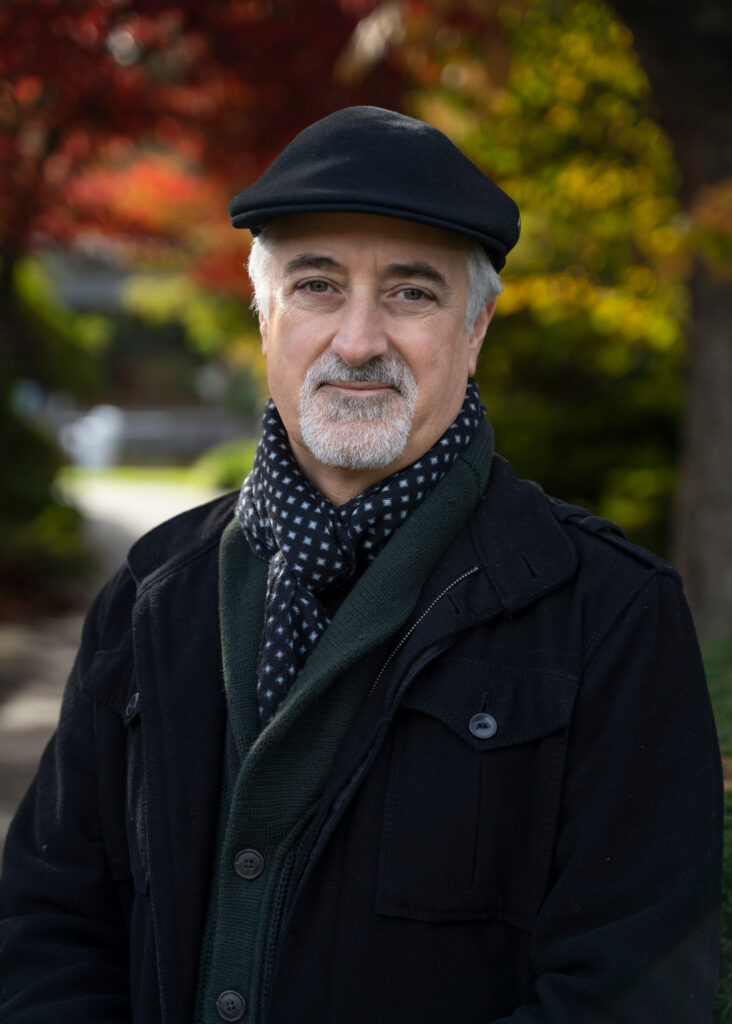
Maxwell A. Cameron specializes in comparative politics (Latin America), constitutionalism, democracy, and political ethics.
BCBL: Canadians are less intoxicated by national exceptionalism than Americans. But can our supposed modesty become a smugness that leaves us unprepared for a knife fight?
MC: American exceptionalism—the belief that the United States is uniquely great and has a providential mission to remake the world—runs deep in the country’s founding and informs policies such as the Monroe Doctrine. It repeatedly leads American politicians into error. If you want a “big lie,” American exceptionalism is one.
Canadians have generally recoiled from that kind of nationalism, but we may have become smug in imagining ourselves immune to it. I find nationalism difficult. As a teenager, I refused to stand for the national anthem at school and wrote a letter to the school paper arguing that “nationalism precipitates fascism.” My teachers were not pleased. My instincts are cosmopolitan: I study comparative politics and am interested in the world.
Yet when Canada faces a threat to its sovereignty, it is not wrong to feel some patriotic pride about what we have accomplished. We are imperfect; much remains to be improved. But readers of my book—especially conservatives—have written to say they appreciate that I avoid being relentlessly negative about the country. Many feel that progressives have become so absorbed in criticism that they no longer acknowledge what Canada has done well.
We can recognize our achievements while confronting our failures. That balance prevents patriotism from becoming smug self-satisfaction. Smugness neither generates action nor makes us want to improve. Nor does moral superiority offer much protection when somebody is bringing you to your knees.
BCBL: You write that Trump has given settler Canadians a taste of being told they do not own their country or possess an inherent right to self-determination. Can that experience deepen our understanding of Indigenous peoples?
MC: I hope so. The argument was partly inspired by an op-ed by Jody Wilson-Raybould in The Globe and Mail. If Canadians want to know what it feels like to have a foreign power arrive and take what is yours, Indigenous peoples have experience with that—and have developed tools for resisting colonialism
I am comfortable describing my heritage as settler Canadian. My family came from Scotland and Ireland, settled in the Ottawa Valley, homesteaded across the country, cleared land, farmed and worked on the railroads. They did not think of themselves as participants in a colonial project and I did not initially think of them as colonizers. Calling myself a settler can feel strange because I have no personal attachment to the tough agricultural life they endured. But the term acknowledges Canada’s colonial past and my family’s place within it.
As a settler Canadian who does not want us to destroy the country’s environment and future, I feel kinship and allyship with First Nations. But we cannot expect First Nations to do all the work of resistance for us. In British Columbia, Wet’suwet’en opposition to pipelines has placed Indigenous people on the front line of resistance to extractivism. In Alberta, First Nations are a first line of defence against separatism or absorption into the United States because they insist that no referendum can determine their future without their participation.
Settler Canadians must stand on our own feet and learn to resist such encroachments. There is much we can learn from First Nations.
BCBL: You argue that our challenge is not to escape negative emotions but to educate and channel them—and to cultivate a more expansive love for members of the political community and beyond. Is there a Christian undertone to that mission?
MC: Perhaps in one sense, but I am a scholar of Aristotle and have spent a great deal of time reading him. The idea that emotions are not obstacles to moral reasoning but must be educated—so that we take pleasure in what is right and feel pain when something is wrong—is Aristotelian. Christian thinkers such as Thomas Aquinas later adopted it, so there is compatibility between Christian and ancient political thought.
The more specifically Christian element may be the injunction to love your neighbour as yourself. Aristotle did not believe women or enslaved people should be citizens. The Christian idea offers an important amendment: loving one’s neighbour is a universal duty. As [cellist and conductor] Pablo Casals said, “it is good to love your fellow citizens, but why should love stop at the border?”
Canadians should love other Canadians and our neighbours, but that does not mean we should not love people in the United States, Mexico and other parts of the world. I am not a Christian—agnostic may be the better description—but many Christians would share that view. 9781459420656
Sheldon Teitelbaum is an award-winning journalist and BC BookWorld’s senior editor.





The book will help us all to recognize our strengths and confront our own weaknesses as neighbours and citizens.