


Fighting for Canadian literature
As a young English professor in the 60s, Sandra Djwa was drawn to Canadian writers. But Djwa learned she was going to have to fight to get Canadian literature recognized as she tells in her new memoir. Here, we excerpt passages highlighting the prejudices Djwa encountered both as a woman and a “Canadianist.”
August 12th, 2026
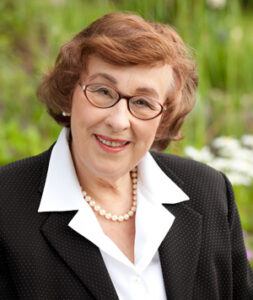
“[M]any of my colleagues were convinced that literature could be English or American—but not Canadian.”
Ground to Stand On: A Canadian Literary Life by Sandra Djwa (McGill-Queen’s University Press $34.95 h.c.)
Studying literature in the early 60s and taking a “new course” on Canadian literature
“By 1964 I had acquired a general sense of English, American, and Canadian literature, but was most interested in Canadian …. My last years as an undergrad were enriched by the visiting Canadian poets who came to speak. [Professor Roy] Daniells had deputized Professor Moses Steinberg, assisted by two lecturers – the novelist Jane Rule (author of the early lesbian novel Desert of the Heart, 1964) and her partner Helen Sonthoff – to take charge of a visiting poets committee. I suspect that it was Daniells who suggested that poets like Leonard Cohen, Dorothy Livesay, James Reaney, and Michael Ondaatje come to read in the English department. When possible Daniells hired fellow poets like [Margaret] Atwood, [Dorothy] Livesay, and Phyllis Webb to teach, and he also offered department support to graduate students like George Bowering and Frank Davey, young poets who had started a poetry little mag, Tish.
“… I had no idea that [Canadian literature] was a new subject in the curriculum. Four years earlier, in 1958, Daniells had started the first UBC course in Canadian literature in an honours seminar. In the same year Professor Reginald Watters had also taught an undergraduate Canadian literature course. Still earlier in 1955, Watters, together with Professor Carl F. Klinck of Western University, had developed Canadian Anthology, now our class text.
“… Occasionally visiting authors came to our class to read from their works. I was soon writing a term essay on W.O. Mitchell’s Who Has Seen the Wind (1947) and another on [Sinclair] Ross’s As for Me and My House. I read all of Margaret Laurence’s prairie novels as they appeared. For the first time I was reading fiction about women by women, in which the characters, language, and situations were unmistakably Canadian. For example, there was Laurence’s Hagar Shipley in The Stone Angel (1964) and Rachel Cameron in A Jest of God (1966). Shortly after I left UBC, Alice Munro published Dance of the Happy Shades (1968), Margaret Atwood, The Edible Woman (1969), and Munro (again) Lives of Girls and Women (1971). I think we were the first generation of students whose university studies equipped us to become scholars of Canadian literature.”
Confronting bias against Canadian literature
“In 1968 I became a teacher of Canadian literature in the English department of the newly founded Simon Fraser University, where radical politics coexisted with patriarchal practices. Also, many of my colleagues were convinced that literature could be English or American – but not Canadian. Dismayed, I became a crusader for my discipline, co-founding with Robin Mathews the Association for Canadian and Québec Literature/L’Association des littératures canadiennes et québécoises.
For the next thirty years I taught and wrote about Canadian subjects including Atwood, [Earle] Birney, Cohen, Munro, and [E.J.] Pratt. Later I wrote the biographies of lawyer F.R. Scott, English professor Roy Daniells, and poet and artist P.K. Page. As a woman, a Canadian, and a Canadianist, my ground to stand on became the literature of Canada.”
On sexism
“Women faculty in the forties and fifties, like Professors Mawdsley, Ruth Humphrey, Marion Smith, and Mabel Mackenzie – most with PhDs – regularly complained they did not get the classes or the salaries they deserved. Another of this group, Professor Edna Baxter, took me aside in 1965 and said, ‘Get your PhD and get the hell out of here!’
“… Jane Rule, also a faculty member and a novelist, thought highly of Daniells and the UBC department. Nonetheless, she told me in an interview years later, she ‘didn’t know of any man in that period who wasn’t sexist.’
“… As a young woman professor, I also experienced a degree of sexist microaggression from both students and faculty. When a male student attempted to play footsie under the table while attending one of my seminars, I learned to stand when giving lectures. And when a male colleague told me that my necklines were ‘too low’ and my skirts were ‘too short,’ I developed a university uniform consisting of white buttoned-up shirts and black skirts that reached well below the knee – all in the interest of self-preservation.”




Leave a Reply