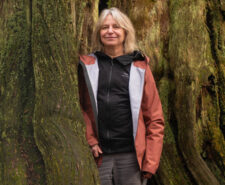


Suzuki at 90
A new book of photos, personal recollections and congratulatory letters lauds the decades of work of one of Canada’s favourite broadcasters and environmentalists.
April 14th, 2026
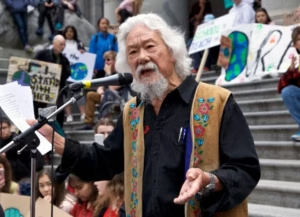
David Suzuki, youth climate march, Vancouver, 2019.
“When the CBC went searching for the Greatest Canadian two decades ago, with more than one million citizens voting, [David] Suzuki landed on the list at No. 5.”
Review by Tom Hawthorn
That David Suzuki is turning 90 seems both implausible (he seems much younger on television) and inevitable (dude has been a public figure for more than a half-century).
He is so familiar a figure that strangers with children in tow confront him with demands he save the planet for future generations. He is a tribune in an age of anxiety. The environmentalist Bill McKibben calls him “a Paul Revere in so many ways,” and Suzuki himself acknowledges “it has been my lot in life to be a Cassandra or a Chicken Little.”
That is a lot of pressure for someone not naturally ebullient, who grew up as an outsider in a world in which he was an enemy because of his race (Canada officially labeled people of Japanese descent, including its own citizens, as “enemy aliens” during World War Two), and a scientist whose most notable achievements were not earned in a lab coat but as a communicator.
While certain right-wing foes have made him a target and while he has on occasion made intemperate pronouncements, Suzuki remains a revered figure for many Canadians. When the CBC went searching for the Greatest Canadian two decades ago, with more than one million citizens voting, Suzuki landed on the list at No. 5.
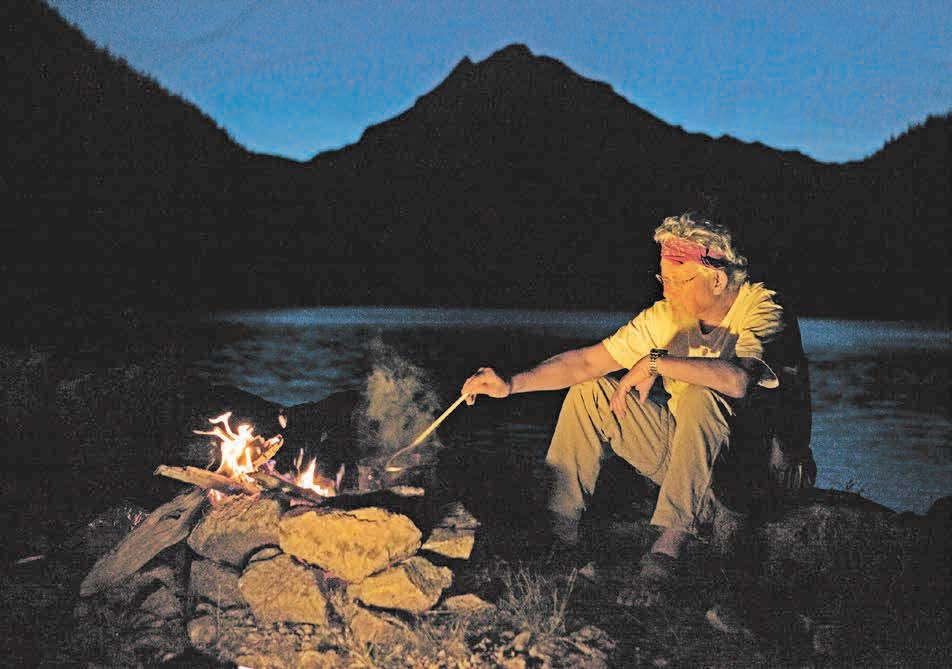
David Suzuki, Beatrice Lake, Slocan Valley.
So, a landmark birthday is an appropriate time for reflection. Lessons From a Lifetime: 90 Years of Inspiration and Activism (Greystone $40) (written with Ian Hanington, a senior editor and writer at the David Suzuki Foundation) is a packaging of photographs, personal reflections and congratulatory letters compiled by Greystone Books in partnership with the David Suzuki Institute.
Suzuki became a well-known figure through the CBC, first on radio’s Quirks & Quarks and, especially, television’s The Nature of Things with David Suzuki, where he showed his talents as a curious
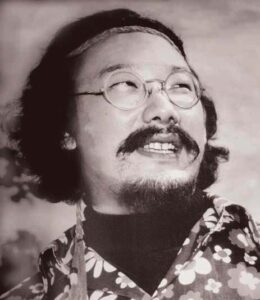
David Suzuki, television host of Suzuki on Science, 1969.
investigator and compelling interviewer. (Thanks, as well, to cracker-jack crews of producers and technicians.) He had a rare ability to share his awe and wonder for science with bigger questions about how scientific developments would affect people and place.
Before becoming a broadcaster, he had enjoyed a stellar career as a fruit-fly geneticist. Early on, he discovered that the ability to share knowledge with common language was not a skill shared by many fellow eggheads.
“We support science because it is a part of what it means to be civilized,” he writes, “pushing back the curtains of ignorance by revealing bits and pieces of nature’s secrets.”
His intellectual talents were matched with an empathy for social justice (again, not a skill for which scientists are known), much of which was nurtured from his own humble childhood during which his family was wrenched from its comforting daily routine, which he describes in a chapter titled, “My happy childhood in racist British Columbia.”
Suzuki’s parents, both born in Canada, ran a small laundry and dry-cleaning shop in Marpole, a blue-collar neighbourhood in south Vancouver. The family had been established in Canada for more than three decades by the time he was born in Vancouver on March 24, 1936. Before his sixth birthday, the Canadian government would order the family and other Japanese Canadians to be forcibly relocated after war was declared with Imperial Japan.
His father was separated from the family for a year, while his mother adapted to living in a camp in Slocan City. Young David remembers being bullied in the camp for not speaking Japanese.
Even after the war ended, the government refused to allow Japanese Canadians to return to the coast. The Suzuki family wound up in farming communities in southwestern Ontario, first in Olinda and later in Leamington, a notorious “sundown” community in which Black people were expected to leave the community before nightfall.
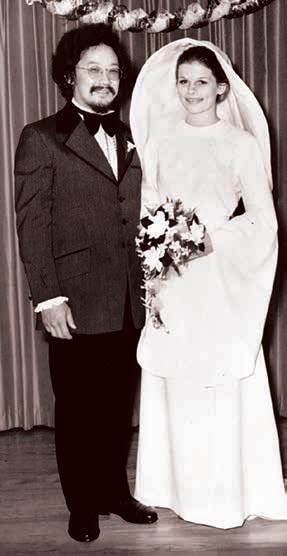
David Suzuki and Tara Cullis, wedding day, 1973.
“My loneliness during high school was intense,” he writes. “My one solace was a large swamp that was a ten-minute bike ride from our house. But I spent most of my waking hours daydreaming, creating a fantasy world in which I was endowed with superhuman athletic and intellectual powers that would enable me to bring peace to the world and win mobs of gorgeous women begging to be my girl.”
His father encouraged David to take up public speaking in high school, which turned out to be a life-defining skill. He may have been lonely, but he was elected class president.
Later, he would admit that growing up in a racist environment left him with a self-loathing “because of my small eyes and Asian appearance,” a feeling that evaporated in the late 1960s after he taught at the University of California at Berkeley, a multicultural campus in a multicultural city, and later at the University of British Columbia.
While recording a 1982 episode about logging in Windy Bay on Haida Gwaii for The Nature of Things, Suzuki befriended a young Haida artist and carver. “Guujaaw opened for me a window into a radically different way of seeing the world,” Suzuki writes. An Indigenous outlook where one was part of the environment instead of the Western approach of merely having a relationship with it struck Suzuki as a profound insight, guiding his approach to the world ever since.
The celebratory letters in the book border on the hagiographic: Maude Barlow (“a preacher for the biosphere”), Jane Fonda (“a poetic, soulful scientist”), ethnobotanist Nancy J. Turner (“a hero of the planet”), his second wife Tara Cullis (“I sometimes feel I’m married to a National Living Treasure”). But it is a testament to his longevity and influence that so many notables have crossed paths with him.
Suzuki’s 90th birthday is an occasion when you wish the celebrant many happy returns. 9781778403606
Tom Hawthorn’s latest book—“Play Ball!,” an anecdotal history of baseball in Vancouver—was released in 2025.




Leave a Reply