

What makes life worthwhile?
August 25th, 2026
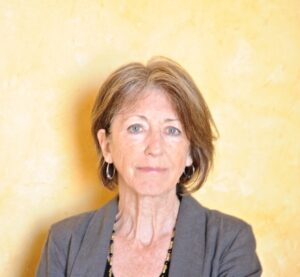
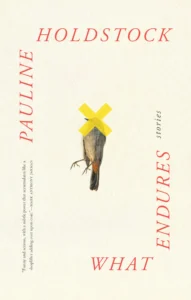
Pauline Holdstock’s short story collection, What Endures (Biblioasis $22.95), takes readers from tense dinner parties and brain surgery at Christmas time to unruly dogs and small acts of kindness. The Victoria writer’s short stories mix realism, humour and touches of magic. Together, they ask a simple question: What makes life worth living?
Holdstock’s fiction has been shortlisted for the Giller Prize and the Commonwealth Writers’ Prize. She won the Ethel Wilson Fiction Prize and the City of Victoria Butler Book Prize. Her work has appeared in the Globe and Mail, Vancouver Sun and National Post. She spoke with BC BookWorld senior editor Sheldon Teitelbaum about why she avoids genre labels, her recurring alter ego Vita and why poetry now seems “the only possible response to the times.”
by Sheldon Teitelbaum
BC BookLook: Your stories range from mimetic realism to hints of the supernatural. Is there a genre you are particularly drawn to?
Pauline Holdstock: With one exception—and that’s fairy tale—there really is no genre that I’m drawn to. I resist “genre” as a way of thinking about literature. For me there’s only form and style, by which I mean the way the shape of the story presents itself—differently every time—and then the way its language demands to be turned to express an idea, an impulse or an outcome to work towards.
The desired outcome is important. It’s the intent of the story. Am I working towards a revelation, hoping for some new insight, or am I looking for a particular emotional response from the reader—a confirmation, even—to match my own response to the world as it appears in the story? All of which could be another way of saying I’m looking for connection, that heart-to-beating-heart connection with the reader.
 BCBL: Characters recur in the collection. Are you creating a Holdstock literary universe populated by them?
I think there’s really only one character who recurs, and that would be Vita. Inept or inadequate as a fully fledged human, she will never be an adept in the world and often finds herself out on a limb. She masks her insecurities with relentless humour. It’s me, of course, so she might appear either as the protagonist or the narrator. If she’s lucky, she might get a whole book.
BCBL: What exactly do you mean by the title What Endures? What endures?
PH: The “what endures” of the title is a statement: something worthwhile, something lasting that comes through the turmoil and setbacks of life and brings affirmation. It’s for each reader to decide: What makes life worthwhile?
There’s a small incident at the end of the story “The Five-Barred Gate” that, as inconsequential as it seems, is a counterweight to the negative forces at work in the story.
BCBL: Short story collections are notoriously hard to sell. What is the state of the form in Canada, and why is it your chosen métier?
PH: The fact that they’re a hard sell continues to amaze me, since we all have so many demands on our attention. They’re the perfect length for a brief time-out with a book. But publishers aren’t catering to the needs of readers. They’re placing bets on the “The Next Big Thing”—the mellifluous sound of “millions,” the vision of a movie-rights sale. The American writer Rebecca Makkai has described the disastrous consequences this practice has for the prospects of the short story writer.
BCBL: In “Perfect Obedience,” Vita’s unruly dog becomes a test of innocence, goodness and human judgment. What prompted the story?
PH: The impetus came from the collision of my own unruly dog with the philosophy of Simone Weil, a strong influence on my work at one time.
BCBL: What do you have in mind for your next venture?
PH: Poetry. It seems like the only possible response to the times. But I expect it will work hand in hand with short shorts. Tears or laughter. There’s no middle way at the moment.
9781771967174




Leave a Reply