


The krilling grounds
How does a creature that can be as small as a paperclip sustain a body as large as that of a blue whale? But that's exactly what krill do.
September 08th, 2026

Review by Heidi Greco
Rossland-based author Yolanda Ridge introduces this book with a recollection of being 12, when she proudly wore a silver necklace that proclaimed “Save the Whales.” She’s moved on and now supports the necessity of saving more than just the whales. She’s done her own “deep dive” and gone to the source of food for so many species of whales: krill.
It’s hard to fathom just how a creature that’s sometimes only as big as one’s fingertip or a paperclip could sustain a body as large as that of a blue whale, but that’s exactly what krill do—though, admittedly, they do this in very large numbers: “… up to 40 million per day!” writes Ridge. “If you piled all those krill on the world’s largest dinner plate, they would weigh between 17 and 18 tons (16 metric tons)—the same as 8,800 burger patties.”
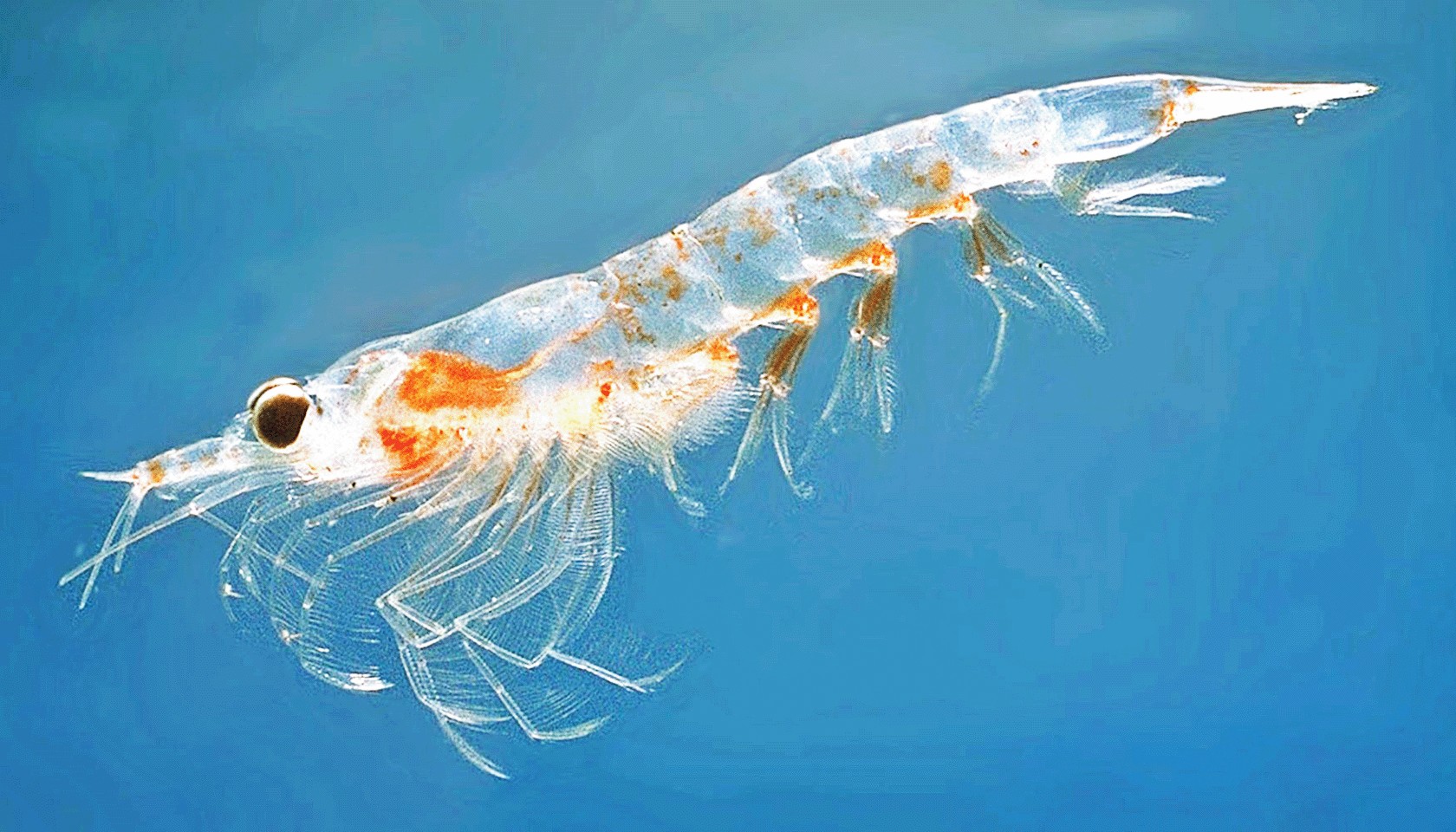
Northern krill (Meganyctiphanes norvegica). This creature serves as one of the foundations of the entire aquatic food chain.
Making this kind of comparison is one of the things Ridge does so well. She uses examples from everyday life to explain numbers and terminology. One of my only disappointments regarding these illustrations occurs when she compares the size of the biggest krill species to the length of a five-dollar bill. Sadly, the accompanying image is not of the lovely Canadian blue example but of the American five.
She takes readers through the entire life cycle of krill, beginning with them as tiny eggs that float near the ocean’s surface. But then down, down, down they go, like tiny submarines to the bottom where more transformations take place. Although Ridge focuses on Antarctic krill, she also takes us around the globe, exploring the many different environments where the various species of krill live—apparently in every single ocean, including our own local waters. Krill, in fact, are one of the reasons our beloved sockeye salmon have a deep orange-pink flesh while other salmon species such as chinook or coho have a paler pink flesh, as the latter feed on small fish rather than krill or zooplankton.
Ridge also squeezes in a number of complicated explanations, but somehow makes them clear enough to be easily understood. She describes what’s involved in the course of ocean acidification and even breaks down the process of bioluminescence—the ability that krill have to glow in the dark.
Like all the books in the Orca Wild series, nearly every page features a colourful photograph highlighting some aspect of this little species’ importance. Many pages offer explanatory sidebars, and whether these might be called a “deep dive” or “krill corner” or a “giant fact,” each contains enlightening information about these tiny critters. More than one mention is made of poo, but that’s typical of a book that clearly aims to make learning fun.
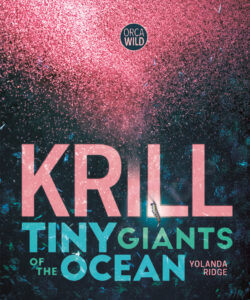 And though the book, Krill: Tiny Giants of the Ocean (Orca $24.95), makes it fun to learn about krill, their life cycles and habitats, it also makes a number of very serious points about the changes our species is making on the planet, specifically its oceans. These range from the impact supertrawlers make on krill populations with their “… vacuums that can suck up more than 550 tons (500 metric tons) of krill per day—the daily diet of about 150 humpback whales,” to citing some of the effects of climate change, especially the rising temperatures and acidity of seawater. Ridge also reminds us about the dangers of microplastics, substances now turning up in even our food.
While these cautionary signs demand our attention, they are particularly critical to keystone species, a classification in which krill are now recognized for all that they do to support the greater food chain.
There’s an old-timey poem that claims “for want of a nail, the kingdom was lost.” No nails here, but the parallel seems true: if we don’t protect the existence of krill, more than some imaginary kingdom will be lost. This tiny creature serves as one of the foundations of the entire aquatic food chain. These days, Ridge’s slogan has evolved into “Save the Krill” for without them, life on the planet as we know it would be terribly altered.
Tiny giants, indeed. 9781459842878
Without realizing she was swimming with krill, reviewer Heidi Greco has enjoyed the wonder of paddling about in bioluminescent waters off Hornby and Salt Spring Islands.




Leave a Reply