


Fifty years of mountain rescues
November 23rd, 2026
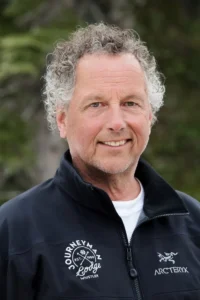
Brad Sills joined Whistler Search and Rescue in 1976 and has served as a team member and on the executive board of the organization for fifty years. He has led numerous large-scale searches and technical rescues, resulting in his certification in 2017 as one of only twelve Level 2 SAR managers in British Columbia. He is currently a director of the Air Rescue Association of Canada. Now retired, he spends most of his time honing his carpentry skills and skiing, swimming and flying in as much of the province as he can. He lives in Whistler, BC.
Interview by Harbour Publishing
Question: There are so many heart-stopping and heartbreaking moments in this book. The technology and training have advanced since the 1970s, but the dedication of people involved remains unwavering. This is a very emotional story. Whistler Search and Rescue started with a small group of dedicated volunteers and continues as a mostly volunteer organization to this day. You were there from the beginning.
Brad Sills: In the early days, search and rescue was a rudimentary endeavour. We were all neighbours who knew the mountains and answered the call when someone went missing. I was living in the woods (squatting) at the time and had no phone, so another member (sometimes another squatter) would come around to request my help. We relied on local knowledge, grit and each other, and there was very little formal training or coordination between teams.
Today, it’s a far more sophisticated and effective service. Across BC, around 3,200 volunteers are part of a system with better coordination, sharper skills and practices, and new technology. Today, we don’t use paper maps or rely on compasses; virtually every member is guided through their assignment by some form of digital application.
What hasn’t changed is the heart of it: volunteers still giving countless hours, and communities standing behind them. Every success and every tragedy along the way have taught us something, and many, many valuable changes came out of those lessons. That’s what I wanted to capture in the book.
Q: As you say, the pursuit of any gravity sport, such as skiing, climbing or paragliding, brings with it an increased risk. Gravity shows no mercy, and sports that challenge it sometimes lead to serious trauma and injury. Do you think outdoorsy people are natural risk takers?
BS: I’d push back on that a little. In my experience, most people who end up needing rescue aren’t reckless. They’re usually enthusiastic but usually underprepared. They might have the wrong gear, an ill-informed sense of the conditions, or too little experience for the terrain, and they didn’t realize it until things went sideways. Living in beautiful BC, we share this landscape with people from around the world. Not all of them have the benefit of our knowledge base. Just the other day, we were called to rescue three foreign nationals from a warm climate who inadvertently got caught in an early- season snowstorm with only minimal clothing and running shoes. While they had seen lots of photos of snow and knew it was associated with cold temperatures, they were oblivious to the fact that it is also wet, and it is that combination that is going to kill you.
The mountains here are as dangerous as they are beautiful, and conditions can change fast. Someone can do almost everything right and still get into trouble. Experienced people get caught out too, and some of the missions I remember most involved skilled, careful people.
Where risk does come in is that people who love the outdoors tend to be comfortable pushing themselves. The best of them pair that with humility: they check the forecast and avalanche conditions, tell someone their plans, carry the right gear and turn around when the day isn’t working. That judgment matters far more than how bold someone is.
As SAR [search and rescue] volunteers, we never ask why someone needs help. Our job is to get them home, and that’s the attitude I hope readers take from the book.
Q: Can you tell us about the founding of CARDA, the non-profit organization dedicated to training and certifying avalanche rescue dogs?
BS: In March 1978, Whistler Mountain ski patroller Bruce Watt was buried in an avalanche. That close call led him to push for a rescue-dog program on the mountain, and his dog Radar became one of the first civilian dogs validated for avalanche rescue in Canada.
At the time, avalanche dog handlers in Canada were with the RCMP, and the validation process for civilians was complicated. Watt and Fernie patroller Rod Pendlebury were encouraged to spearhead a separate organization to train avalanche rescue dogs outside the RCMP. That became the Canadian Avalanche Rescue Dog Association [CARDA], a non-profit volunteer organization formed in 1982. Early on, the group drew on the RCMP dog training manual and the ground search criteria used in search and rescue, and it later formed a working relationship with Germany’s Bergwacht mountain rescue service and adopted some of their methods for validating teams.
The model worked. In December 2000 at Fernie, a CARDA team made the first live recovery by a dog team in Canadian history. Like all Canadian dog teams, WSAR [Whistler Search and Rescue] avalanche rescue dogs must pass the validation exam every year.
Q: In the book, you mention that in SAR “we adhere to a safety priority motto. It reads: 1. Self, 2. Team, 3. Public, 4. Subject.” Can
you elaborate on this?
BS: The order exists for one reason: a rescuer who becomes a casualty can no longer help anyone, and now needs rescuing themselves.
You look after yourself first. That means being fit, equipped, trained and rested enough for the task, and being willing to say, “I’m not comfortable with this.” A rescuer who is exhausted, cold or overextended makes poor decisions.
Next are the people beside you. We go in together and come out together, and no one’s judgment is overridden by the urgency of the moment. Any member can call a stop.
Then come bystanders, family members and anyone else who could be drawn into the situation. Well-meaning people who rush in become additional victims, so part of the job is keeping them safe.
The person we’ve been called to find comes last on the list. That is not because they matter less. Their best chance is a well-run response from a team that stays intact, and a rushed or reckless attempt can end with two casualties instead of one.
It can feel counterintuitive, because we’re there to save someone. But putting safety first is what keeps rescue sustainable.
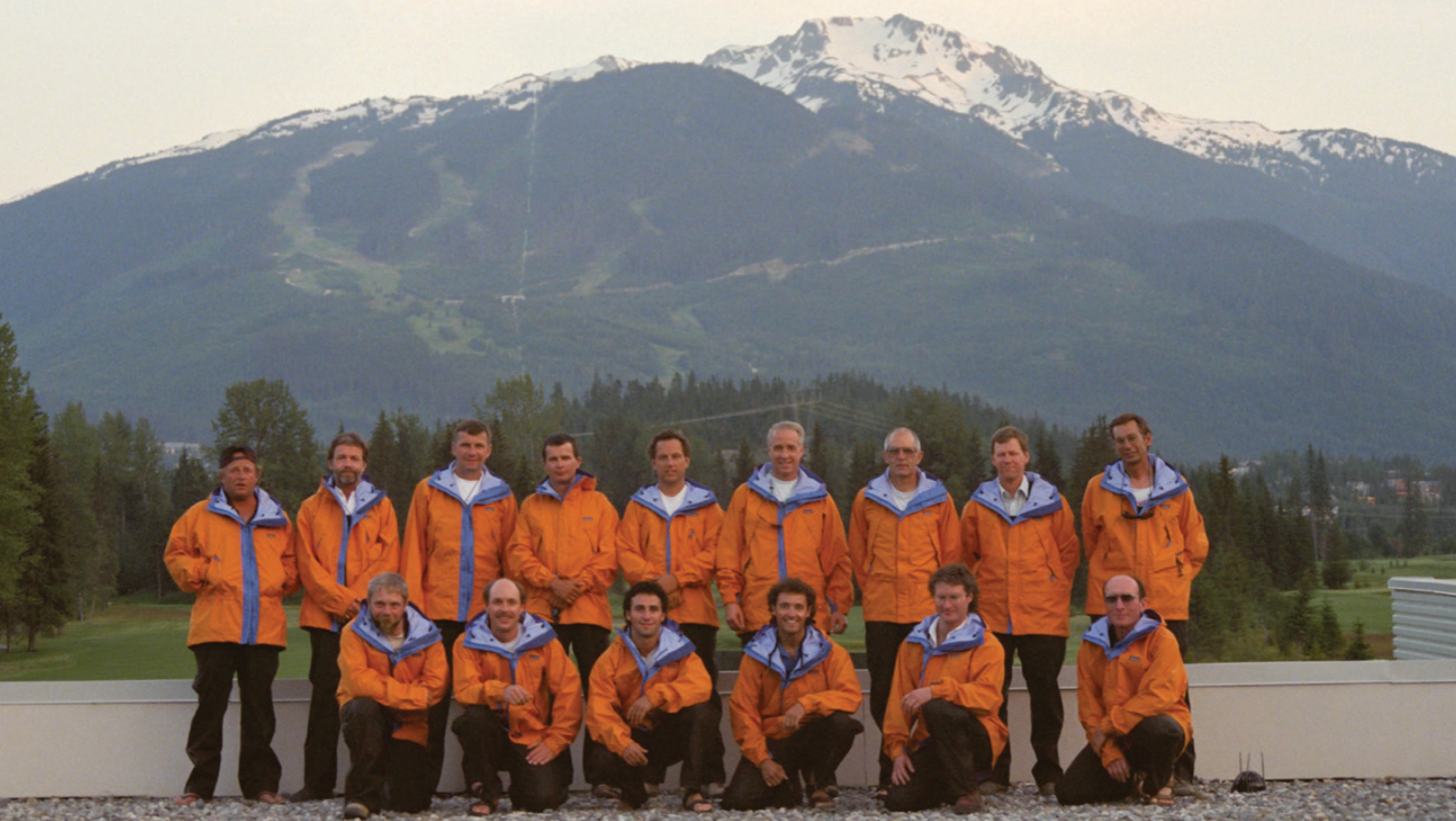
Photo: WSAR ARCHIVES.
Q: SAR management operates in twelve-hour periods, beginning with the first notice. How did this come about and why?
BS: An operational period is the block of time scheduled for a given set of actions in the incident action plan. In SAR management, it’s typically twelve hours, which fits how searches actually unfold. In BC, most searches and rescues end within a single twelve-hour period.
The first period begins at first notice and usually ends at 6 a.m. or 6 p.m., depending on when the call came in. After that, the response runs in full twelve-hour cycles, commonly starting at 6 a.m. and 6 p.m.
I think the length works because it matches what volunteers can safely give. It roughly lines up with day and night, it gives teams a natural point to rest, rotate and hand over, and it gives the management team a regular cycle to review what was found, update probabilities and set objectives for the next period. We always plan at least twelve hours ahead.
Q: There has been talk in the media over the years about charging people for their rescue, but you remind us that SAR work is about helping anyone who finds themselves in trouble, regardless of the reason. Is the fear that people won’t ask for help if they think they are going to get a big bill?
BS: Yes, that’s a big part of it. Delay is one of the biggest enemies in search and rescue. The sooner we’re called, the better the odds, and people already hesitate: they’re embarrassed, they don’t want to bother anyone, or they hope they can fix it themselves. If they also fear a large bill, some will wait longer or not call at all. By then, the weather has turned, daylight is gone and what could have been a straightforward task becomes a dangerous one for the subject and for the team.
There’s also a matter of principle. We don’t ask why someone needed help. Whether the person was unprepared or just unlucky, our job is to get them home. Sorting out fault in the field would slow us down and change how people see us.
None of this means people shouldn’t take responsibility. Good preparation is the best protection, and we encourage it: the right gear, a trip plan and the judgment to turn back. But I’d rather have someone call early, feeling a bit foolish, than wait because they were afraid of the cost.
Q: How common is out-of-bounds skiing? Are skiers from outside Canada more likely to underestimate the extent of the BC wilderness?
BS: It’s common enough that it’s a regular part of our winter. Whistler sits next to a ski area with easy access to the backcountry, so the line between the resort and open wilderness is often just a ridge or a rope. WSAR has typically handled about fifty calls from the start of winter through May. A good share of those involves people who skied out of bounds, often by mistake or because they underestimated the terrain, and they can be in steep gullies and avalanche terrain within minutes of leaving the lift.
On the second part, I’d be careful about stereotyping. Our experience has been that the people we pull out are mostly locals or Vancouver-based skiers, not tourists. Overconfidence and familiarity play a role as much as unfamiliarity.
That said, international visitors do bring their own risks. Someone arriving from a country with smaller, more developed mountains may not grasp how big and remote the terrain is here, how quickly the weather changes, or how long it can take us to reach them. We see this quite often.
One winter, three foreign nationals on student visas heard about a backcountry lodge on Instagram and set out to snowshoe to it, and a windstorm made rescue impossible that night. The common thread isn’t nationality. It’s that social media and ease of access make the backcountry look more approachable than it is.
Q: The Province of BC instituted new initiatives that applied more to natural disasters (earthquakes, floods, et cetera) than to search and rescue. As you point out in the book, “the Province of BC has no expertise in search and rescue and, in fact, relies completely on individual, community-driven volunteer organizations.”
What impact have those new initiatives had on SAR work then and now? It’s important to shine a light on this decision.
BS: The story of search and rescue in British Columbia is one of resilience, dedication and community spirit. For decades, volunteers have stepped into the most challenging environments, driven by a commitment to save lives and serve their neighbours. Their expertise and local knowledge have made
BC’s SAR system is one of the most effective in the world.
As the province’s emergency management structure has evolved, from the Provincial Emergency Program to Emergency Management BC and now the Ministry of Emergency Management and Climate Readiness, its focus has leaned increasingly toward large-scale events like floods, wildfires and earthquakes.
The recent years have brought significant challenges. Changes in legislation, shifting government priorities, underfunding and bureaucratic hurdles threaten the very fabric that has made our SAR operations successful. The disconnect between government agencies and grassroots volunteers, combined with efforts to tighten control and impose top-down policies, risks stifling the innovation and agility that have historically made BC’s SAR so effective.
Search and rescue is a different kind of work. It’s small, fast, local and dependent on knowledge of particular terrain, and it has always rested on the energy forthcoming from community volunteers.
The effect has been mixed. SAR volunteers are very grateful for the support they receive from the province. It co-develops the ground SAR safety program and funds the volunteers through the BC Search and Rescue Association. Volunteers get reimbursement, workers’ compensation and liability coverage, and SAR training administration is supported through a grant to the Justice Institute of BC. The 2023 Emergency and Disaster Management Act also gives the province a framework for registering, training and deploying volunteers. However, some are concerned that these same powers are becoming increasingly used to transform the efforts of so many to that of unpaid civil servants.
There’s no denying that these issues are real and urgent. But within these difficulties lies the opportunity to confront them directly and forge a better path forward. We can acknowledge the mistakes of recent years—the lack of consultation, underfunding and top-down approaches—and choose to learn from them.
The way forward requires honesty, collaboration and a shared sense of purpose. It involves recognizing that the grassroots volunteers—the backbone of BC’s SAR system—hold vital knowledge, skills and passion that must be supported, not sidelined. It demands that government and leaders listen more intently, engage transparently and invest properly in training, equipment and resources.
Q: Can you tell us more about the ghosts of the lodge near Callaghan Lake? In the book, you describe how you “arrived one morning to face some deeply unsettled employees” about forty years ago.
BS: I had arisen early to travel up to the lodge and check on the crew’s needs for the next week. It’s in a remote mountain valley and requires an intense forty-five-minute ride on a snowmobile to get there, so I had anticipated a hot coffee awaiting me on my arrival. Instead, my two carpenter employees were just getting out of bed and were engaged in some early morning banter about how one was up in the night going to the bathroom and making enough noise to wake the other one up. The other replied he had not gone to the bathroom, and further, why did his fellow workmate see fit to dress up in a white dinner jacket and open the door to his room and stare at him intently? Both were clearly coming to terms with the fact that some kind of spirit was among them. This was the same year that parts of a jet trainer lost in 1956 had been found close to the lodge, but no sign of the ejection seats or pilots’ remains had ever been found. The date of this occurrence was March 22, exactly forty-two years after the crash.
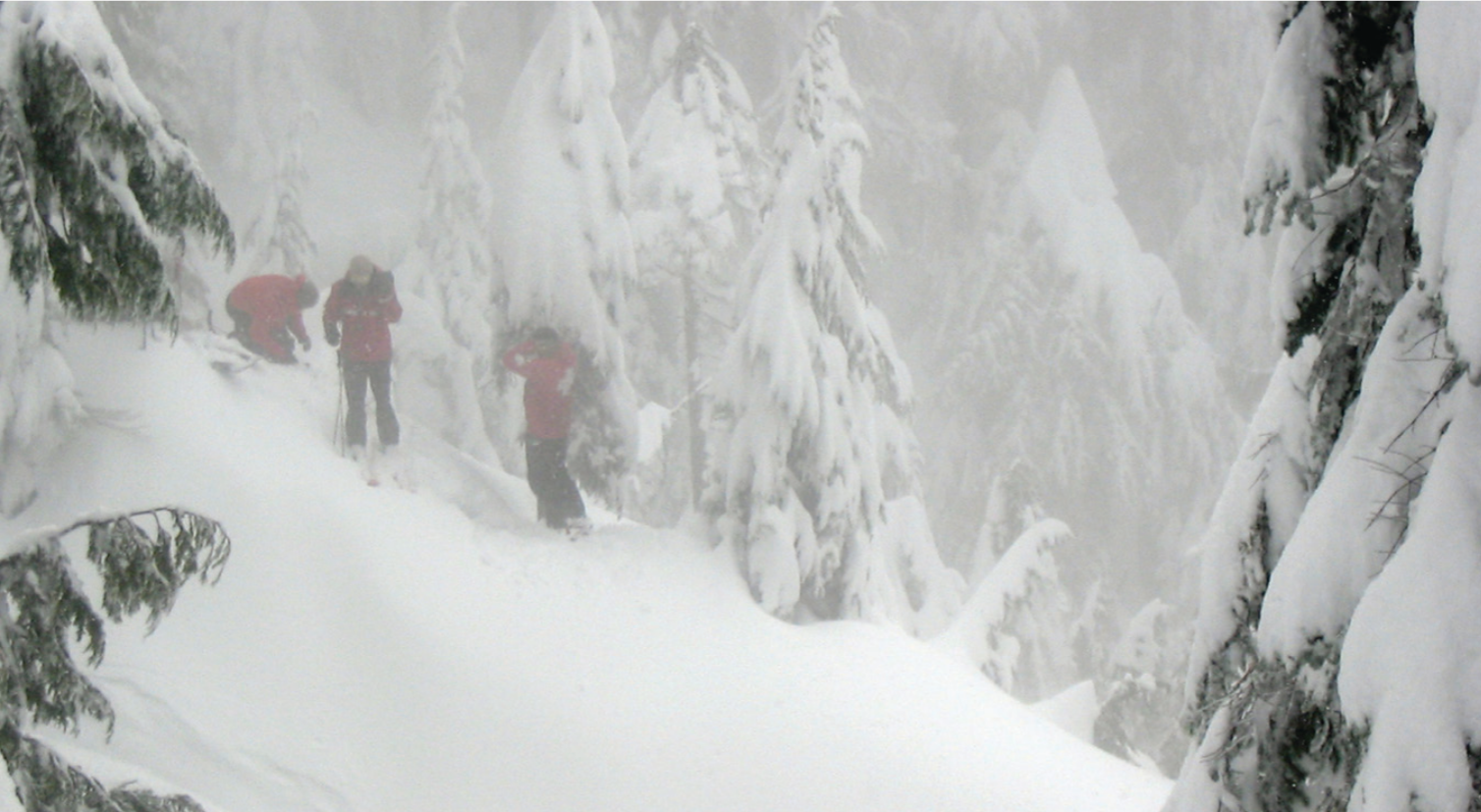
Photo: Brad Sills.





Leave a Reply