

Becoming herself
A small-town hockey referee unravels a lifetime of silence and rebuilds her life as a transgender woman, finding truth, loss and unexpected joy along the way.
March 24th, 2026
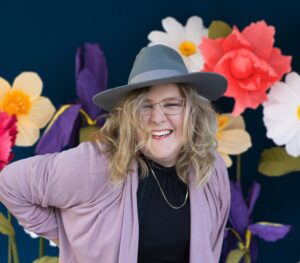
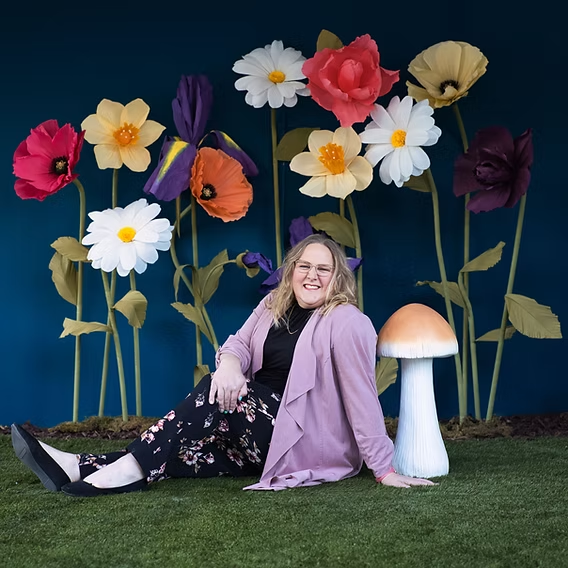
Dee McWatters is an inclusion advocate, speaker and author on gender identity and transformation.
“I was not afraid of losing a partner. If my parents became distant, I felt I could handle that. However, if my kids did not take it well and shut me out, I thought that could be likely the worst possible outcome. I love being a parent and love my children with all me [sic] heart.”
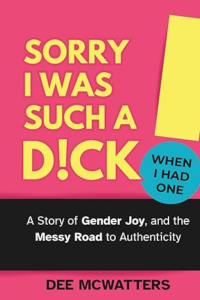
After decades living what appeared to be a conventional life in small-town BC, Dee McWatters steps into public view with Sorry I Was Such a D!ck, When I Had One!: A Story of Gender Joy, and the Messy Road to Authenticity (self-published $24.99). An inclusion consultant, speaker and advocate for 2SLGBTQIA+ equity in sport, McWatters draws on her lived experience as a former firefighter, wine industry professional and hockey referee to examine gender, identity and belonging. Her memoir traces the emotional and psychological realities of coming out later in life, navigating family relationships and rebuilding a sense of self. Now serving in leadership and advisory roles with organizations such as BC Hockey and other national inclusion initiatives, McWatters continues to work at the intersection of sport and advocacy, using her story to foster understanding and change. 9781069729712
*
BC BookLook: We have to start here: Sorry I Was Such a D!ck, When I Had One!… who were you apologizing to when that title came to you?
Dee McWatters: When the moment finally hit me, one beautiful day on a beach in Mexico, my female mind finally saw what my ex-spouse was asking of me years earlier. I realized the differences between the way men and women communicate and how often there is miscommunication between them. The title is a fun, tongue in cheek way of apologizing to her, and maybe for the male gender. Women really are from Venus and Men are from Mars!
 BCBL: You describe your life before coming out as something that looked “normal”—what was the quietest but most painful lie you were living every day?
DM: In the book, I describe the feelings of having so much confusion about expression and gender, without any context to compare anything to. The memoir touches on some things that happened before the breakdown of my marriage but does not go into detail. I would say the quiet painful lies I lived every day were the odd feelings I would have from time to time about gender roles, gender expression. Having no person to talk to, to share what my thoughts were, was extremely difficult. I did not know if these were normal thoughts, fetishes or something more nefarious. The fact that the world is now more open to discussion about these topics and that more people understand multiple genders and being transgender is a good sign. Suffering those thoughts in silence was probably the hardest secret I had to keep inside my head. There were moments I thought my head would explode.
BCBL: Your book moves through marriage, parenting and transition—what was the conversation you feared the most and how did it actually go?
DM: The conversation I feared most was the one with my kids; my two teenage sons. I was single at the time, and my ex and I had been separated for 8 years. I was not afraid of losing a partner. If my parents became distant, I felt I could handle that. However, if my kids did not take it well and shut me out, I thought that could be likely the worst possible outcome. I love being a parent and love my children with all me heart. When my ex and I sat down with them one January evening, I was extremely nervous. I honestly can barely remember the words. I recall having four pages of vocabulary and terms defining gender, sexuality, etc. I explained how I felt, how gender seemed blurred to me and I wasn’t sure what I was exactly feeling or how I wanted to express myself. Their response: “Yeah, we know what those terms mean. We learn this in school. We have friends who identify differently. Its all good and no matter what, we love you. Regardless of how you express, you will always be our dad…What’s for dinner?” That’s how it went and why I always call my sons “my heroes.”
BCBL: There’s a mix of dark humour and really raw pain in your story—was there a moment you almost didn’t include in your story because it felt too exposed?
DM: There are several moments and situations in the book that I was afraid to divulge for several reasons. I was very cognizant to protect anyone from harm. This is my story told in my way and voice. The harm I did to others emotionally was great, but none as much as the internal self harm I did. The other reasons were that I was too embarrassed to divulge how often and how far down the proverbial “rabbit hole” I would sometimes go; whether online, meeting people or losing drastic amounts of sleep chasing something I couldn’t even name. I have still consciously withheld some of the more intricate details. I realize that what I have shared did help me face my past and learn who I was from the mistakes I made. The details of such situations are simply lessons for me alone to learn from. Details that no one else really needs to hear. They are not secrets per se, I am not hiding anything. I am honest about much of the past. They are just some moments that can best just be left in the past and forgotten now. I know who I am and that is sufficient.
BCBL: There’s a version of you refereeing hockey, being “one of the guys”—what was going through your head in those locker-room moments?
DM: In my teenage years, I did not feel too out of sorts in the locker room. However, when friends talked about girls and girlfriends and likely being sexually active, I couldn’t relate. I was a late bloomer and it was later in my teens that I would have my first girlfriend and well let’s say I almost hit my 20’s before I lost my virginity. Yet when conversations were of a sexist and misogynistic nature and perhaps a bit toxic, (although I will say my hockey friends growing up were perhaps less toxic in their masculinity than some stories one hears) I would shyly laugh, but have no context or real understanding. I also thought it was inappropriate underneath it all. All of those feelings are valid regardless of gender or sexual orientation. It is one of the reasons I work in inclusion in sports. I thought there would never be a day that I would or could ever discuss the feelings I had internally.
BCBL: There’s a line in your story about finally being seen—what was the first moment someone truly saw you, and how did your body react?
DM: There are actually many moments from the beginning of my transition that I have felt truly seen. Some are very small interactions but with lasting impact, while some are very monumental moments. While skating as an official early in my transition and having a young female hockey player ask if my bleach blonde hairdo was my natural colour and liking my earrings. The moment in the lingerie store pre-GRS surgery when Paula said women come in all shapes and sizes and everyone who identifies as such is a woman. At the airport even before HRT when the ticket agent asked if I was travelling WITH Darren. These and others are small moments of affirmation and inside I felt very warm. I really did feel a sense of warm happiness go through my body. Very small positive gestures can have a huge positive impact on someone who is gender non-conforming.
BCBL: You went from living a life the world praised to starting over at 43—what did you lose that you didn’t expect to grieve?
DM: This is a tough question to answer. For one, I don’t think I really have lost anything. Some things have only changed. My friendships and relationships with friends and family are different, maybe even better. My relationship with my sons is not significantly different, we are very honest with one another. If anything, coming out later in life I perhaps feel I lost being able to experience earlier life as a female, the early to mid 20’s perhaps, and even then, I did not really lose or miss out. I had a form of female puberty in my mid 40’s; while my friends began going through perimenopause, I was experiencing increases in female hormones. As I began to “grow up” as a female, I was making friends in certain circles of officiating with women in their early 20’s who accepted me as their peer and friend. While there may be a 25-year age difference, we can hang out as friends like there is no age difference. I guess I try not to think about how my life may have been different if I knew I was a woman and began transitioning at age 25 or so. That cannot change. But I would never give up any of it. I do not regret marriage or becoming a parent. I look back and try to appreciate all that I experienced before I knew my authentic self, and now everyday appreciate that I get the opportunity to just live my life authentically and in my true and happy form from here on until the sun sets on my time here on Earth.





Leave a Reply