

Generations of resilience
May 13th, 2026
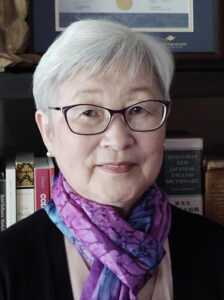
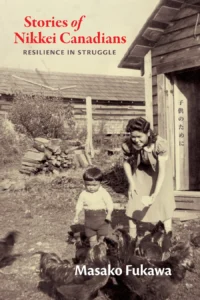
Masako Fukawa is an award-winning educator and historian known for documenting the history of Japanese Canadians in British Columbia. She authored Nikkei Fishermen on the BC Coast (Harbour, 2007) and the Canada-Japan Literary Award-winning The Spirit of the Nikkei Fleet (Harbour, 2009) and co-authored Righting Canada’s Wrongs: Japanese Canadian Internment in the Second World War (Lorimer, 2012) with Pamela Hickman. In Stories of Nikkei Canadians: Resilience in Struggle (Harbour Publishing $24.95), Fukawa draws on oral histories, photographs, memoirs and archival research to trace five generations of Japanese Canadian life, from immigration and settlement in coastal BC to wartime internment, dispossession and postwar rebuilding.
*
Question: This book is the story of your family’s history in Canada starting with your grandfather’s arrival in Vancouver in 1893. He was just 16 years old. It’s hard to imagine a modern 16 year old making a similar journey, especially without a cell phone.
Masako Fukawa: Yoshimatsu was “pushed” to leave Japan. His furusato – home village – was one of the poorest and being the second son, he had to leave the village and seek his fortune elsewhere. The eldest son inherited the meager family “fortune” of a small plot of rice paddy. He was “pulled” to Amerika that offered adventure and dreams of riches.
 Q: After a 14-day voyage in steerage, Yoshimatsu landed in Vancouver.
MF: Yes he did and then he took a stagecoach to the village of Steveston.
Yoshimatsu entered the fishery. After a three-year apprenticeship to a commercial fisherman, he became a fully licensed fisherman and a naturalized British subject. That same year, his younger brother Matsu joined him and he became less lonely. They made a good living fishing together and sent money home to their parents in Mio Mura. Life was good.
Q: When your grandfather came here it was only forty years after Japan had opened to the West. That is astonishing.
MF: Japan was an ancient country, but it had been in seclusion from the rest of the world for over 200 years. It was forced to open its doors to trade in 1853 when Commodore Perry from the United States arrived in Tokyo Bay and displayed its might with coal fueled ships against the wind and sail of the Japanese ships. Treaty ports were forced to open for trade. Yoshimatsu learned about the west from the treaty port of Yokohama and from letters sent by a fellow villager who wrote of fish being so plentiful on the Fraser River that they jumped into his boat.
Q: Conditions in the early years were hard – “until electricity arrived, my grandmother’s rhythm of life revolved around the hours of daylight and varied with the seasons.”
MF: Kiri Shinde – my grandmother – was a handful of women pioneers in Steveston until the arrival of picture brides after 1908. Living conditions were harsh. Her life revolved around the hours of daylight, tap water was shared with several families and when the pipes froze, water from the Fraser River was boiled for cooking and drinking. Life was a lonely, almost solitary, until the influx of picture brides in 1913.
Q: Gyosha Dantai, the Fraser River Fisherman’s Benevolent Association had 3700 members in 1900. They founded the Japanese Fisherman’s Hospital that provided health care for everyone in the community.
MF: My father, Yoshiharu Shinde, was born in 1906 at the Steveston Fishermen’s Hospital as were all his younger siblings as well as his own son in 1941. The hospital became a symbol of the community’s commitment to Canada and its pride. The Gyosha Dantai or the Fishermen’s Association established a hospital insurance. For a fee, medical care was covered with the exception of some surgery. It may be the first of its kind in Canada… before its introduction in Saskatchewan by Tommy Douglas.
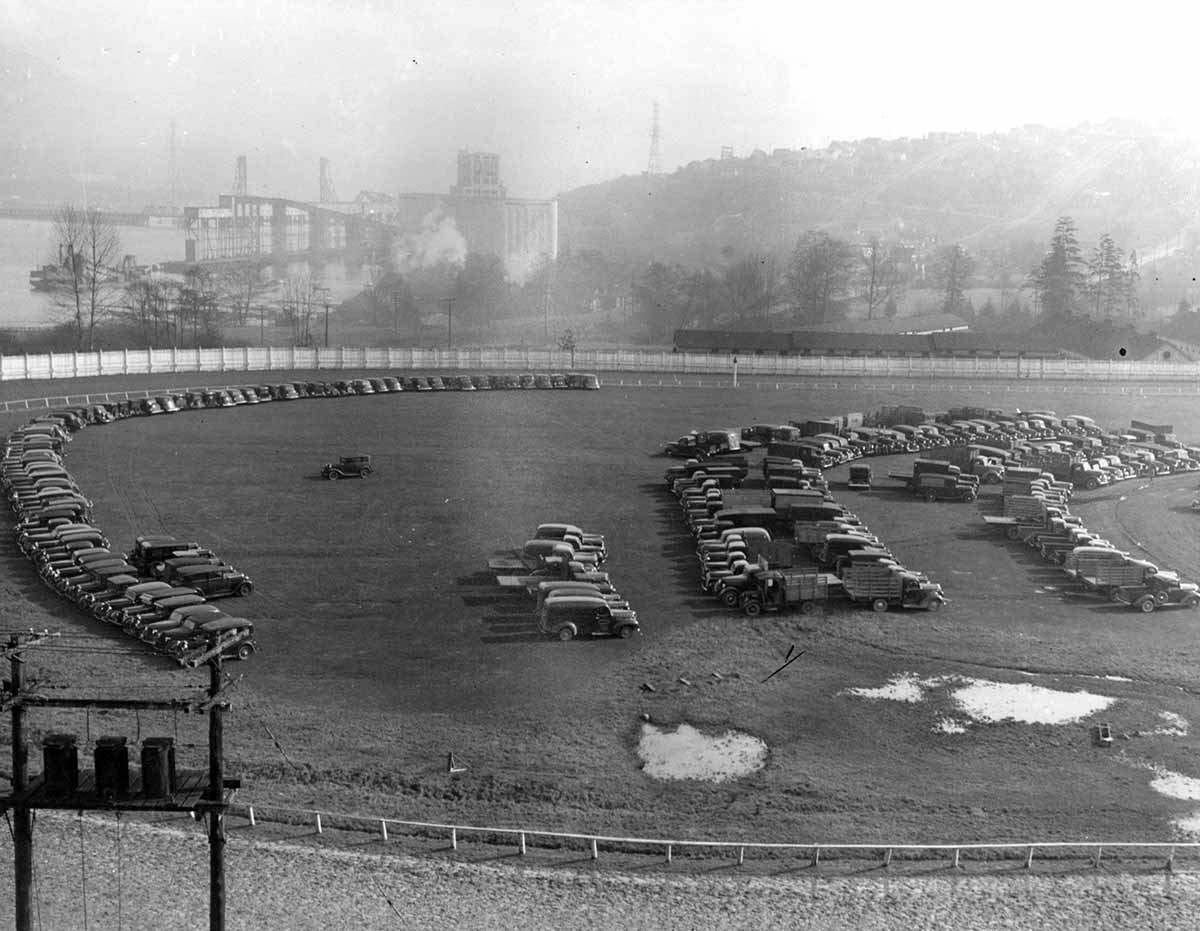
Cars impounded at Hastings Park. Credit: japanesecanadianhistory.net
Q: Although this is the story of your family, it is also the story of all Japanese Canadian families that suffered internment during World War Two on Canada’s West Coast. You share the stories of many families who were removed from the West Coast. 22,000 people lives were forever altered in 1942.
MF: All persons of Japanese ancestry were declared “enemy aliens” and on Dec. 16, 1941, those 16 years and over were required to register and carry an enemy alien card. It was colour coded – white for my father who was Canadian born, pink for my grandparents who were naturalized Canadians and yellow for Japanese nationals. Vital statistics plus a photo and thumb print were recorded on the card. It had to be carried on the person at all times and produced on demand. Non-compliance led to imprisonment.
Q: Steveston was a bustling village. There were lots of Japanese communities on the coast and in the Fraser Valley and Vancouver. The attack on Pearl Harbour triggered the War Measures Act in Canada, it was swift and merciless. You were only 18 months old.
MF: Steveston a fishing community, by the 1940s, was the second largest Japanese Canadian community. The Powell Street area clustered around Hastings Mill in Vancouver was the largest. Normal life came to a standstill in 1941 when the Japanese military bombed Pearl Harbor in Hawaii and the Canadian government invoked the War Measures Act. It gave the government unlimited powers. People of Japanese ancestry were all labelled enemy aliens, whether Canadian born or not, forcibly removed from their homes, families separated, dispossessed of their properties and possessions, and deprived of their civil liberties.
I was 18 months old, when my government declared that I was an enemy alien. I was not the enemy, nor was I an alien. I was born in Prince Rupert, BC. I was separated from my father who was sent to work in a road camp while the rest of the family were relocated to Greenwood, a ghost town in the Kootenays, the first internment camp.
Q: The Canadian government of the day promised to keep all assets in trust but sold everything instead at auction. Not just things of monetary value but family keepsakes, irreplaceable things of great sentimental value.
MF: In Canada the Custodian of Enemy Property was created to keep Japanese Canadians’ property in its care, ostensibly until the owners return. That promise was broken. What Japanese Canadians could not carry in their suitcase they left behind and those items were disposed of without the owners’ consent.
Q: Japanese Canadians were banned from land ownership and got what was left of their money in 1949. Most of their pre-war assets were gone. For instance, 769 Japanese Canadian farms sold without their owners’ consent.
MF: My father-in-law was a farmer as were his relatives. Their land was sold to veterans and other non-Japanese. A Japanese Canadian first world war veteran’s land was confiscated and sold. After many years of letter-writing and appealing to fellow veterans, he was able to buy back his land. He was the only one who was successful in regaining his farm.
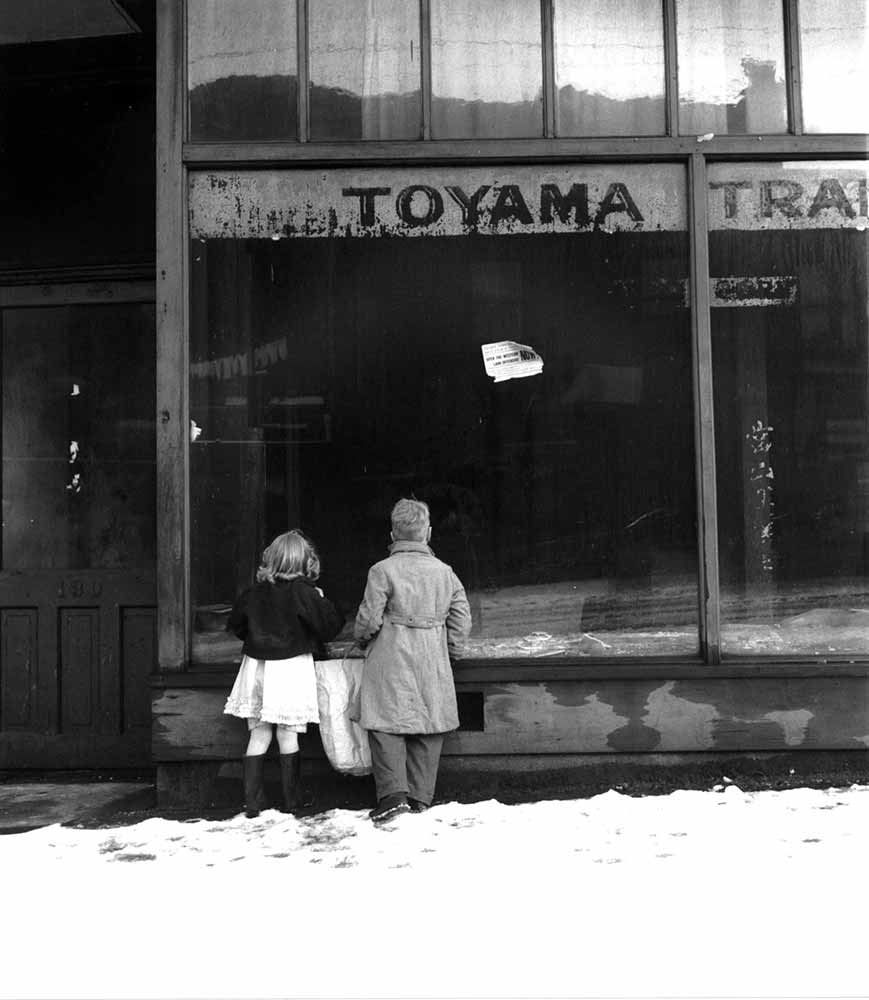
Empty store after relocation. Credit: japanesecanadianhistory.net
Q: Japan surrendered on Sept 2, 1945, but Japanese Canadians were banned from returning to the West Coast until March 31, 1949.
MF: The Japanese community had been under surveillance since 1938. The expulsion of some 22,000 became the largest mass exodus in Canadian history. In the US. more than 110,000 Japanese Americans were also uprooted and confined in concentration camps.
The war against Japan to one Canadian politician was a “heaven sent” opportunity to rid the Japanese from the province. Japanese Canadians did not have the franchise, the right to vote, and were politically vulnerable.
Racism was systemic and was the cultural norm in BC society.
Unlike the Americans, Canadian nisei were not able to enlist in the Canadian military until 1945 and then only when the British and Australians came looking for nisei to recruit as interpreters. Canadian Japanese were not allowed to return to the coast until 1949 – 4 years after the end of the war.
Japanese Americans returned before the war ended in 1945.
Q: The experience of Japanese Canadians in WW2 is significant and important for everyone to learn. Is their history taught in the BC curriculum?
MF: I first saw “Japanese Canadian” in print when I was a third-year student at UBC. My English professor had assigned essay topics and on the list was Japanese Canadian internment.
I hurried to the stacks in the library to look for material and came across an article by Pierre Berton in MacLean’s magazine. Its title shocked me
“They’re Only Japs.” I was fearful of what I may find but my curiosity got the better of me. Berton was being sarcastic. He was decrying the unjust treatment of the Japanese.
In 2000, I requested the BC Ministry of Education to produce resource materials for teachers on the internment and redress of Japanese Canadians. It was not well received. However, with perseverance and support from Japanese Canadian organizations, a team of teachers and I were able to produce two books and a website. Currently, my son hosts the website Japanesecanadianhistory.net
A requirement of BC Redress is the development of education resources and the training of teachers. Its website is Japanesecanadianhistory.com. As of Sept 2025, Japanese Canadian history has become a required part of the grade 10 Social Studies curriculum which is the teaching of injustices and racist histories in BC.
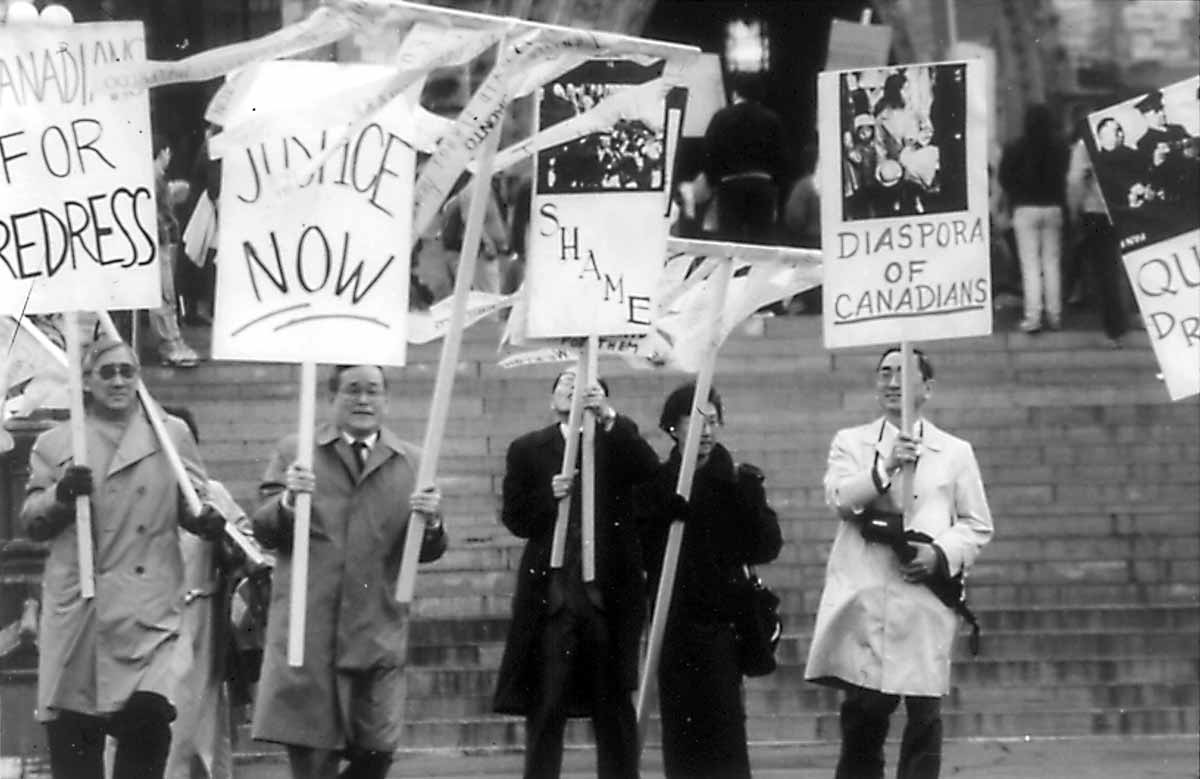
Rally in Ottawa. Credit: japanesecanadianhistory.net
Q: Your parents protected you from knowledge of the internment because they want to protect you and your siblings. It must have been an emotional discovery for you.
MF: After I read Pierre Burton’s article, that evening I confronted my parents.
“Why didn’t you tell us?” Their response was “Kodomono tame ni“, for the sake of the children. They wanted us to have a happy childhood and not grow up feeling bitter over events that they could not control.
My father believed in forgiveness. He said to me “Forgive and forget. The people who perpetrated the injustices are now gone. Don’t burden the younger generations with their sins.” My mother was apprehensive and fearful. She was reliving the fear she experienced when my father was threatened with imprisonment. Furthermore, she did not want to put in jeopardy what they had rebuilt.
Q: Some of the photos in Stories of Nikkei are reminiscent of the images we see in the news today. In the book, the image of the young boy sitting by himself at an adult dining table is haunting. The separation of families leaves lasting scars.
MF: Researchers on Japanese Americans identify the powerful impact on four forms of trauma: individual, race-based, historical and cultural. They also discovered that there are long-term intergenerational impacts. In Canada, the issei generation lost what wealth they were able to accumulate in their lifetime. Nisei lost the opportunity for an education and others were led to believe that they brought racism upon themselves because they did not assimilate. In the socialization process, sansei lost their Japanese language and their culture. The yon-sei and go-sei, fourth and fifth generations, are developing their own Japanese Canadian culture. 9781998526482
Masako Fukawa will launch her new book, Stories of Nikkei Canadians: Resilience in Struggle, at the Gabriola Museum on Sunday, May 24, 2026, from 2:00–3:00 pm. Part of the museum’s ongoing Omoide – Memories, Recollections, Reminiscences exhibit, the event will feature a reading and discussion exploring five generations of Japanese Canadian history, including stories connected to Gabriola Island and Steveston. Copies of the book will be available for purchase at the event.
More information and event details can be found here: Book Launch with Masako Fukawa – Stories of Nikkei Canadians – Resilience in Struggle




Thanks to Masako Fukawa for showing how her story is part of the Canadian story, and with determination but not bitterness. We have been corresponding around this story for about 20 years, and will meet in person today at the Gabriola event.